

Should I Text My Ex? What the Tarot Cards Say (Yes or No Reading Guide)
Most of the time, the tarot answer to “should I text my ex” is “not yet.” That’s because the urge usually comes from loneliness, nostalgia or a bad night rather than a clear reason. This guide gives you a five-card spread, card-by-card meanings for this exact question, and a way to read the result honestly so the deck doesn’t just repeat what you already want to hear.
The Short Answer Before You Shuffle
Tarot can’t tell you what your ex is thinking or whether they’ll reply. It can show you why you want to reach out, what you’re hoping the message will do, and whether you’re ready for any outcome.
If you can’t handle silence after you hit send, the honest answer is no. That holds even if the cards look friendly. If you could send the message and genuinely be okay without a reply, the cards have something useful to say.
Keep that benchmark in mind through every card below.
Why This Decision Feels So Heavy
Texting an ex looks like a small thing. It’s one message, maybe twenty words. Yet people sit with their thumbs over the keyboard for hours.
It feels heavy because the text carries a whole story. It holds the relationship, the breakup, and every version of the future you imagined. One message seems to decide whether that story is over.
Fear plays a big role too. You fear they won’t answer, or that they will answer and it will hurt. Underneath that, you may fear that staying quiet means you gave up on something that mattered.
Tarot slows that spiral down. Laying out cards forces you to sit, breathe and look at each piece separately. Used that way, it’s a good tool for this question.
Reset Before You Interpret
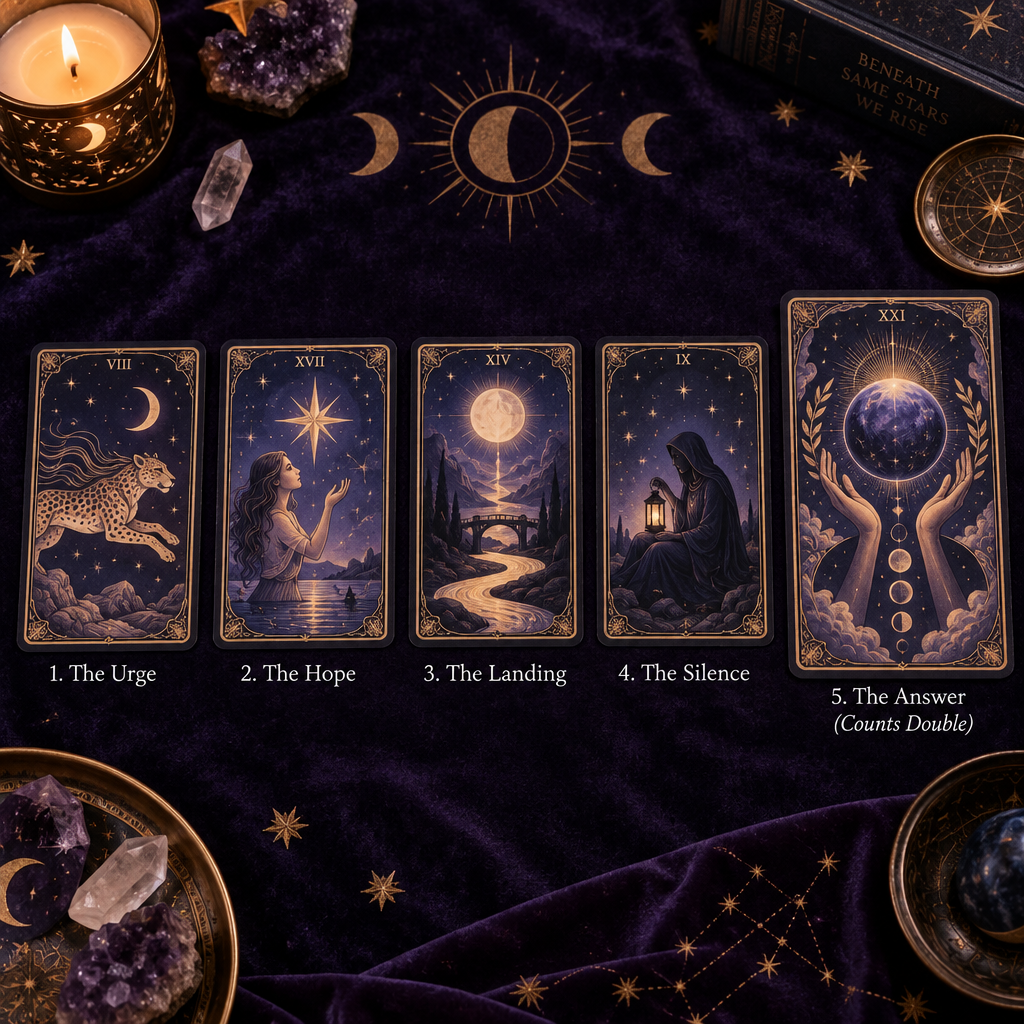
Don’t pull cards while you’re crying, drunk, or ten minutes after seeing their new partner on Instagram. The deck reflects whoever is shuffling it. If you’re flooded, you’ll read every card as a sign.
Before you shuffle, take a few minutes to come back into your body:
- Put your phone in another room. You can’t read honestly with their contact screen open.
- Breathe slowly for two minutes. Make the exhale longer than the inhale.
- Notice where the urge lives. Is it a tight chest, a buzzing in your hands, or a pit in your stomach? Name it.
- Write one sentence about why you want to text. Don’t edit it. “I miss them” counts. So does “I want them to know I’m fine.”
That last step matters most. You’ll compare the cards against that sentence later.
How to Phrase the Question
“Should I text my ex?” works as a starting point, but it’s vague. Sharper wording gets clearer readings.
Here’s how small changes in phrasing shift what the deck can show you:
| Weak question | Stronger question |
|---|---|
| Will they text me back? | What will reaching out bring into my life right now? |
| Do they still love me? | What am I really looking for when I want to message them? |
| Should I text them tonight? | Is sending a message this week in my best interest? |
| Are we meant to be? | What do I need to know before I contact my ex? |
Questions about the other person’s feelings are the shakiest kind of reading. You’re asking the cards to speak for someone who isn’t in the room. Questions about your own choices and readiness give you something you can act on.
If you want a strict yes or no, try: “Is texting my ex this week aligned with my wellbeing?” It’s specific, it has a time frame, and it centers you.
The Send or Wait Spread: 5 Cards
This layout is built for one decision. Lay the cards in a row, left to right.
| Position | What it reveals |
|---|---|
| 1. The urge | Why you want to reach out right now |
| 2. The hope | What you’re secretly hoping the message will bring |
| 3. The landing | How the message is likely to be received, or what energy it opens |
| 4. The silence | What happens in your life if you don’t send it |
| 5. The answer | The headline yes, no or wait |
Card 5 gives the verdict. Cards 3 and 4 tell you how much weight it carries. Cards 1 and 2 tell you whether you’re asking for healthy reasons.
A quick tally for yes or no
To turn the spread into a clear answer, score it:
- Yes-leaning card: +1
- No-leaning card: -1
- Wait or neutral card: 0
- Card 5 counts double
- A Major Arcana card in position 3, 4 or 5 adds one extra point in its direction
A total of +3 or higher is a yes. Anything from +2 to -1 is a wait. A total of -2 or lower is a no.
The tally is a guide, not a contract. If card 1 shows desperation and card 5 shows a sunny yes, trust the warning in card 1.
One-card and three-card versions
Short on time? Pull one card and read it as the answer position. It’s fast, but it skips the context about your motives, which is where most of the insight lives.
For three cards, use the urge, the landing and the answer. That keeps the most important check, which is why you want to send it.
Reversals
You don’t have to read reversals. Many readers treat every card as upright and read it on its own merits.
If you do use them, a reversed card often softens or delays its upright meaning. A reversed yes card usually becomes “not yet” rather than a hard no. A reversed no card can mean the obstacle is easing.
Cards That Lean Yes
These cards support reaching out. Notice that most of them still come with conditions. For a broader look at the strongest positive pulls, our breakdown of tarot cards for yes answers covers them in more depth.
Two of Cups. This is the clearest yes for contact. It describes mutual respect and an equal exchange. In the landing position, it suggests the message would be received with warmth. It doesn’t promise a reunion. It promises a decent conversation.
Ace of Cups. A fresh emotional start. If you want to reach out with an open heart and no agenda, this card backs you. If your agenda is to win them back, it becomes less of a yes.
Page of Cups. Traditionally a messenger card, so it shows up often for this question. It points to a light, sincere message. Think “I saw this and thought of you,” not a three-paragraph confession.
Temperance. Balance and moderation. This is a yes to a calm, measured text sent at a reasonable hour. It’s a no to anything dramatic.
The Star. Healing and hope. When the Star appears in the answer position, you’ve likely done enough recovery work to reach out from a steady place. A friendly check-in fits here.
The Sun. Bright, open, honest energy. It’s a strong yes for clearing the air or sharing good news. It asks you to be completely straightforward.
Three of Cups. Friendship and celebration. Expect this card when the relationship could work as a friendship, or when the text is about a shared friend’s wedding or a birthday.
Strength. Gentle courage. This card says you can handle whatever comes back. Strength in position 5 is one of the best signs you’re asking from a grounded place.
The World. Completion. This is a yes for a closure message, such as returning belongings, saying thank you or ending things kindly. It’s rarely a yes for starting over.
Judgement. This card is about a reckoning and answering a call. Upright, it supports an honest conversation or an apology you’ve been carrying. If you want more nuance on this one, the Judgment tarot yes or no reading explores how it shifts by position.
Cards That Lean No
These cards advise against sending the message, at least right now. They aren’t punishments. They point to something that needs attention first.
Five of Swords. Conflict, hollow victories and bruised pride. When this card turns up, the text is likely to restart an old argument. Someone ends up “winning” and both of you feel worse. Our guide to the five of swords yes or no meaning goes deeper on why it’s one of the firmer no cards.
Three of Swords. Heartbreak that’s still fresh. This card in position 1 or 2 suggests you want to text because the pain hasn’t settled. Contact now would reopen the wound.
Ten of Swords. A definite ending. The relationship has run its course. Reaching out would mean poking at something that’s already finished.
Eight of Cups. Walking away from something that no longer fills you. This is a clear signal to keep moving forward. The eight of cups yes or no reading explains why it so often appears when someone is tempted to look back.
The Tower. Sudden upheaval. A text sent under the Tower tends to get an unexpected or explosive response. Wait until things feel less volatile.
The Devil. Attachment, compulsion, unhealthy bonds. This card in the urge position is worth sitting with. It suggests you want to reach out because you feel hooked, not because contact would be good for you.
The Moon. Confusion and illusion. You don’t have the full picture. You might be idealizing the relationship or misreading their signals. Gather clarity first.
Seven of Swords. Hidden motives, possibly yours. Are you texting to “accidentally” find out if they’re seeing someone? This card tends to show up when the message has a secret purpose.
Nine of Swords. Anxiety and sleepless overthinking. This card often appears in late-night readings. The urge is being driven by worry, and sending won’t calm it.
Six of Swords. Moving toward calmer water. You’re in transition and making progress. Contact would pull you backward.
Queen of Swords. Clear boundaries and clear thinking. She advises you to hold the line you or your ex drew. If either of you asked for no contact, she’s reminding you to honor it.
Death. Transformation and endings. Death rarely means something literal, but in this question it’s direct. That chapter is closed, and a new one is opening without them in it.
Cards That Say “Wait”
Some cards aren’t yes or no. They’re about timing. A wait is often the most useful answer the deck can give.
Four of Swords. Rest and recovery. You need time before you can make this decision well. Come back to the question in a week or two.
The Hanged Man. A pause and a change of perspective. Something about how you see the situation needs to shift before you act.
Two of Swords. Stalemate and indecision. You’re blocking out information you don’t want to face. The answer will get clearer once you admit what you already know.
Seven of Cups. Too many fantasies. You’re imagining a dozen ways the conversation could go. Pick one realistic outcome and ask whether you can live with it.
The Hermit. Solitude and reflection. This card says your answers are inside you right now, not in your ex’s reply.
Eight of Swords. Feeling trapped by your own thoughts. The urge may feel like a cage, as if texting is the only way to stop the ache. It isn’t. There’s more on how this card works in the eight of swords yes or no guide.
Eight of Pentacles. Focused work on yourself. Pour your energy into your craft, your routine or a skill you’re building. The eight of pentacles yes or no meaning leans “not now” for questions like this, because your attention belongs elsewhere.
Justice. Fairness and truth. Justice is conditional. Send the message only if it’s honest and fair to both of you. If you can’t say that, wait.
If you want a quick reference for cards not listed here, a full tarot yes no guide with every card is useful to keep beside your deck.
The Tricky Ones: Cards People Misread
A few cards fool almost everyone who asks this question.
The Lovers. People see it and assume reunion. The Lovers is really about choice and values alignment. In this spread, it often asks: are your values truly aligned, or are you choosing based on loneliness? Read it as “decide consciously,” not “soulmate confirmed.”
Six of Cups. Nostalgia. It looks sweet, so people read it as yes. It usually means you’re missing the past, not the person as they are today. In the urge position, it’s a gentle warning that you’re texting a memory.
Knight of Cups. A romantic offer. It can mean you’re about to send a heartfelt message. It can also mean you’re swept up in the idea of romance. Look at the cards around it.
Five of Cups. Grief over what was lost. The two cups still standing behind the figure matter. Something good remains in your life, but it isn’t necessarily the ex.
Knight of Swords. Speed. This card in position 1 almost always describes an impulsive urge. It’s the “type it and send it before I lose my nerve” energy. Slow down.
Three Sample Readings
These are composite scenarios showing how the spread plays out in practice.
Scenario 1: Three weeks out, 1 a.m.
Maya broke up with her partner three weeks ago. It’s after midnight and she wants to send “hey, hope you’re okay.”
- Urge: Knight of Swords
- Hope: Six of Cups
- Landing: Five of Swords
- Silence: Four of Swords
- Answer: The Hanged Man
The tally: 0, 0, -1, 0, and 0 for the answer. Five of Swords in the landing gives a total of -1, which is a wait. The story is even clearer than the number. The urge is impulsive. The hope is nostalgia. The message would likely spark old friction, and silence would give her rest.
The Hanged Man says pause. Maya’s honest answer is “not tonight,” and probably not this month.
Scenario 2: Eight months out, a birthday
Dev and his ex split amicably last year. Her birthday is Friday and he wants to send a short, kind message.
- Urge: Page of Cups
- Hope: Temperance
- Landing: Three of Cups
- Silence: Eight of Pentacles
- Answer: The Star
The tally: +1, +1, +1, 0, then +2 for the Star doubled, plus 1 for a Major in the answer spot. That’s +6, a clear yes.
The urge is gentle and the hope is balanced. The landing suggests friendly reception. Silence wouldn’t hurt him either, since the Eight of Pentacles shows he’s busy and focused. That’s exactly why the yes is trustworthy. He doesn’t need the reply.
Scenario 3: A year later, an apology
Priya ended a relationship badly. A year on, she wants to apologize for how she handled it.
- Urge: Judgement
- Hope: Five of Cups
- Landing: Justice
- Silence: Eight of Cups
- Answer: Strength
The tally: +1, 0, 0, -1, then +2 for Strength doubled, plus 1 for a Major. That’s +3, which is a yes, but a conditional one.
Judgement shows a sincere call to make amends. The Five of Cups hints she’s partly hoping to ease her own grief. Justice says the message must be honest and expect nothing back. The Eight of Cups in silence suggests that not sending is also a valid way to move on.
Strength gives the final word. She can send it if she’s ready to accept any response, including none.
The Difference Between Intuition and Attachment
This is the heart of reading this question honestly. Your intuition and your attachment can sound almost identical in the moment.
Here’s how to tell them apart:
| Intuition | Attachment |
|---|---|
| Quiet and steady | Loud and urgent |
| Holds the same over days or weeks | Spikes at night, after drinking, or after seeing their photos |
| Feels calm in the body | Feels tight, buzzy or desperate |
| Doesn’t need a specific reply | Needs them to respond a certain way |
| Comfortable with waiting | Wants relief right now |
If the cards say yes and the urge has been consistent and calm for weeks, that yes is worth trusting. If the cards say yes but you felt frantic while shuffling, sit with the reading for a few days before acting on it.
Your body usually knows first. Notice whether your shoulders drop or tense when you imagine pressing send.
The Trust Boundary: When Tarot Shouldn’t Decide
Some situations shouldn’t go to the deck at all. No card overrides these:
- They asked for no contact. Respect it. A yes card doesn’t cancel someone’s clear request.
- You’ve been blocked. The answer is already given, and finding another way to reach them isn’t okay.
- The relationship was abusive or controlling. Your safety comes before any reading. Talk to someone you trust or a domestic abuse support service instead.
- You’re in a crisis. If thoughts of your ex are tied to feeling hopeless or unsafe, reach out to a friend, a professional or a crisis line in your country.
- You’re using the cards to monitor them. Pulling daily to check whether they’re seeing someone feeds the obsession rather than easing it.
Tarot works best as a mirror for your own choices. It falls apart when it’s asked to override someone else’s boundaries or stand in for real support.
Some people switch decks for emotional questions. If you’re weighing tarot vs oracle cards for this kind of reading, know that tarot’s fixed structure tends to give firmer yes or no signals. Oracle decks lean toward gentle themes.
Ask Once, Then Come Back to Yourself
Pull the spread once. Then stop.
Redrawing until you get the answer you want is the most common mistake with this question. If you pull a no and immediately shuffle again, you aren’t consulting the cards anymore. You’re negotiating with them.
A good rule: one reading per question, per week. If you didn’t like the result, write down why. That reaction often tells you more than the cards did.
If you truly feel the reading was muddled because you were upset, wait at least 24 hours before trying again. Use the same spread so you can compare.
If the Cards Say Yes: How to Write the Message
A yes means the timing and intention seem sound. It doesn’t mean anything goes. Keep the message simple.
Do:
- Keep it short. Two or three sentences is plenty.
- Send it in the daytime, sober.
- Make it easy to ignore. “No need to reply” takes pressure off both of you.
- Say one clear thing, like “Happy birthday,” “I’m sorry for how I handled things,” or “Your book is here, how should I get it to you?”
Don’t:
- Send a long emotional essay.
- Ask a question that demands an answer, like “Do you ever think about us?”
- Mention the tarot reading.
That last one deserves its own note. People regularly ask whether they should tell their ex the cards said they’d get back together. Don’t. It puts pressure on the other person and turns your private reflection into an argument they never agreed to have. The reading was for you.
Write it first, send it later
Draft the message in your notes app, not your messaging app. Leave it for 24 hours. Read it aloud the next day.
If it still sounds right, send it. If you cringe, edit or delete it. This one habit prevents most of the regret.
Decide what happens next before you send
Before you hit send, decide what you’ll do if they don’t reply within a week. Will you let it go? Will you mute their account? Making that plan in advance protects you from refreshing your phone for days.
If the Cards Say No: Move Through the Urge Gently
A no can sting, even when you suspected it. The urge doesn’t disappear just because a card told it to.
Try these instead of texting:
- Write the message you’d send, then don’t send it. Put it in a journal. Say everything. Then close the book.
- Text a friend instead. Tell them you want to message your ex. Let them talk you through it.
- Delay by 20 minutes. Set a timer. Strong urges often peak and fade within that window.
- Move your body. Walk around the block. The urge often lives in restless physical energy.
- Mute, archive or hide their chat. Out of sight really does help.
None of this means you can never contact them. A no answers the question you asked, at the time you asked it. Things change.
If You Already Sent It
Maybe you’re reading this after the fact. You texted, and now you’re anxious or regretful.
First, breathe. One text is rarely the disaster it feels like at 2 a.m.
Second, don’t follow up. A second message to soften the first usually makes things worse. Let the first one stand.
Third, if you want to pull cards, ask a different question. Skip “Will they reply?” and ask “What do I need to take care of in myself right now?” Cards like the Four of Swords, the Star or the Hermit often turn up here. They point you back to rest and self-care.
Finally, be kind to yourself. Reaching out to someone you loved is a deeply human thing to do.
Questions That Return You to Yourself
Whatever the cards say, these journal prompts help you understand the urge. Answer them in writing, not just in your head.
- What am I hoping will happen in the first five minutes after they reply?
- What will I feel if they never reply?
- What did I miss about them today, specifically?
- Is there someone else who could meet that need right now?
- If a friend were in my position, what would I tell them?
- What part of the breakup story am I still trying to rewrite?
- What would I do with this energy if texting wasn’t an option?
Come back to these after a week. You’ll often notice your answers have shifted. That shift is a reading in itself.
FAQ
Can tarot tell me if my ex will text me back?
Not reliably. Tarot reflects your own situation, choices and energy much better than another person’s future behavior. Ask what reaching out will bring into your life instead. That gives you something you can actually use.
What is the best tarot card for “should I text my ex”?
The Two of Cups is the most supportive card for contact, because it shows mutual respect and an equal exchange. Temperance, the Star and the Page of Cups also lean yes, especially for a short, calm message.
What card means don’t text your ex?
The Eight of Cups, Ten of Swords, Five of Swords and the Devil are among the clearest no cards for this question. The Three of Swords and Nine of Swords often mean the urge is coming from pain or anxiety rather than clarity.
How long should I wait to re-ask the question?
Give it at least a week. Pulling again the same day usually reflects your mood, not new insight. If your circumstances change in a meaningful way, such as your ex reaching out first, that’s a fair reason to read again sooner.
Should I tell my ex about my tarot reading?
No. It puts pressure on them and invites an argument about the reading instead of a real conversation. Keep the reading as private reflection and let your message stand on its own.
What if I get a yes but still feel anxious?
Treat the anxiety as part of the answer. A yes from the cards paired with a knot in your stomach usually means “yes, but not yet.” Draft the message, wait a day or two, and see if the feeling settles before you send it.
Does a reversed yes card mean no?
Usually it means delay rather than a firm no. A reversed Two of Cups, for example, suggests the connection is strained right now. It points to waiting and working on yourself before reaching out.