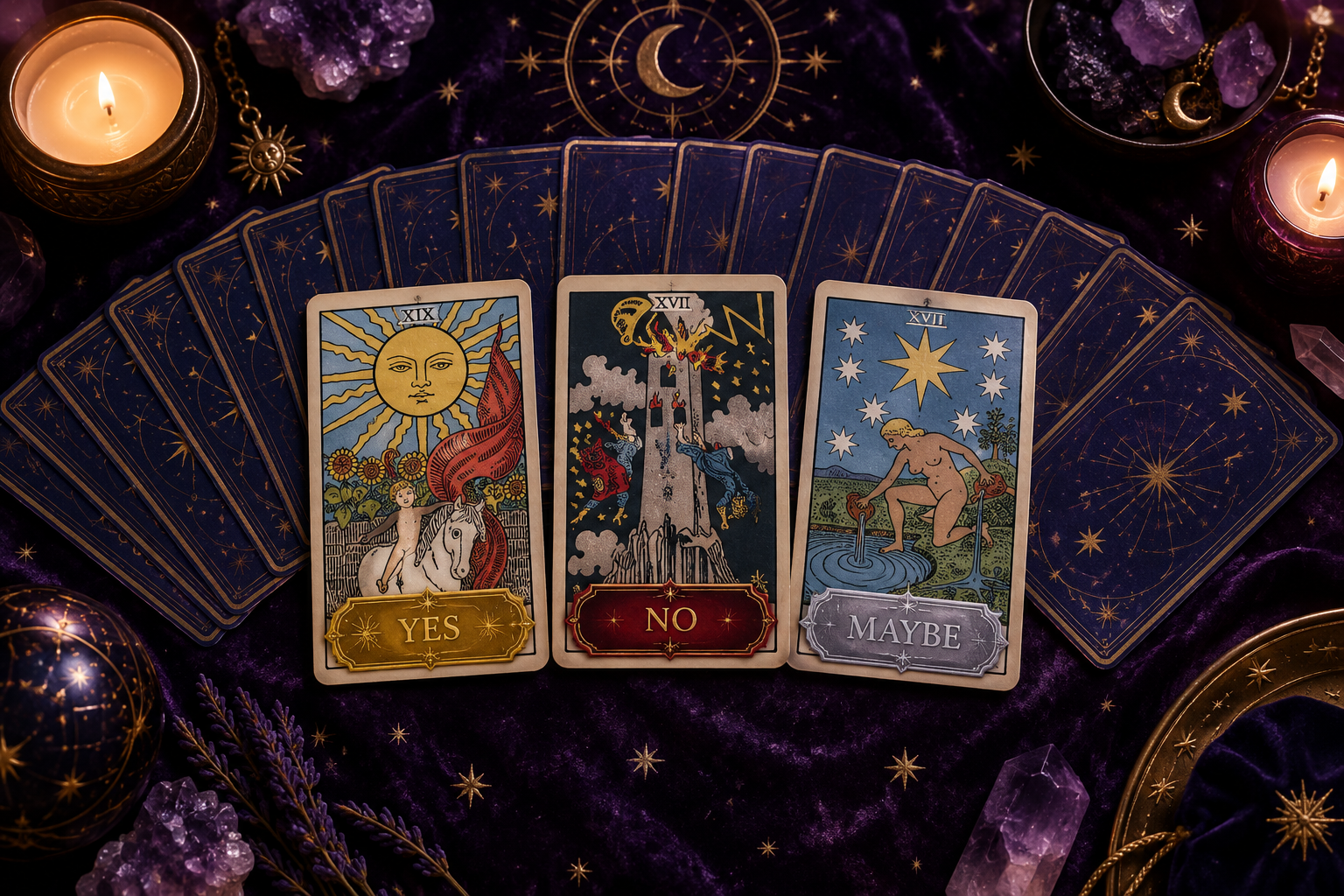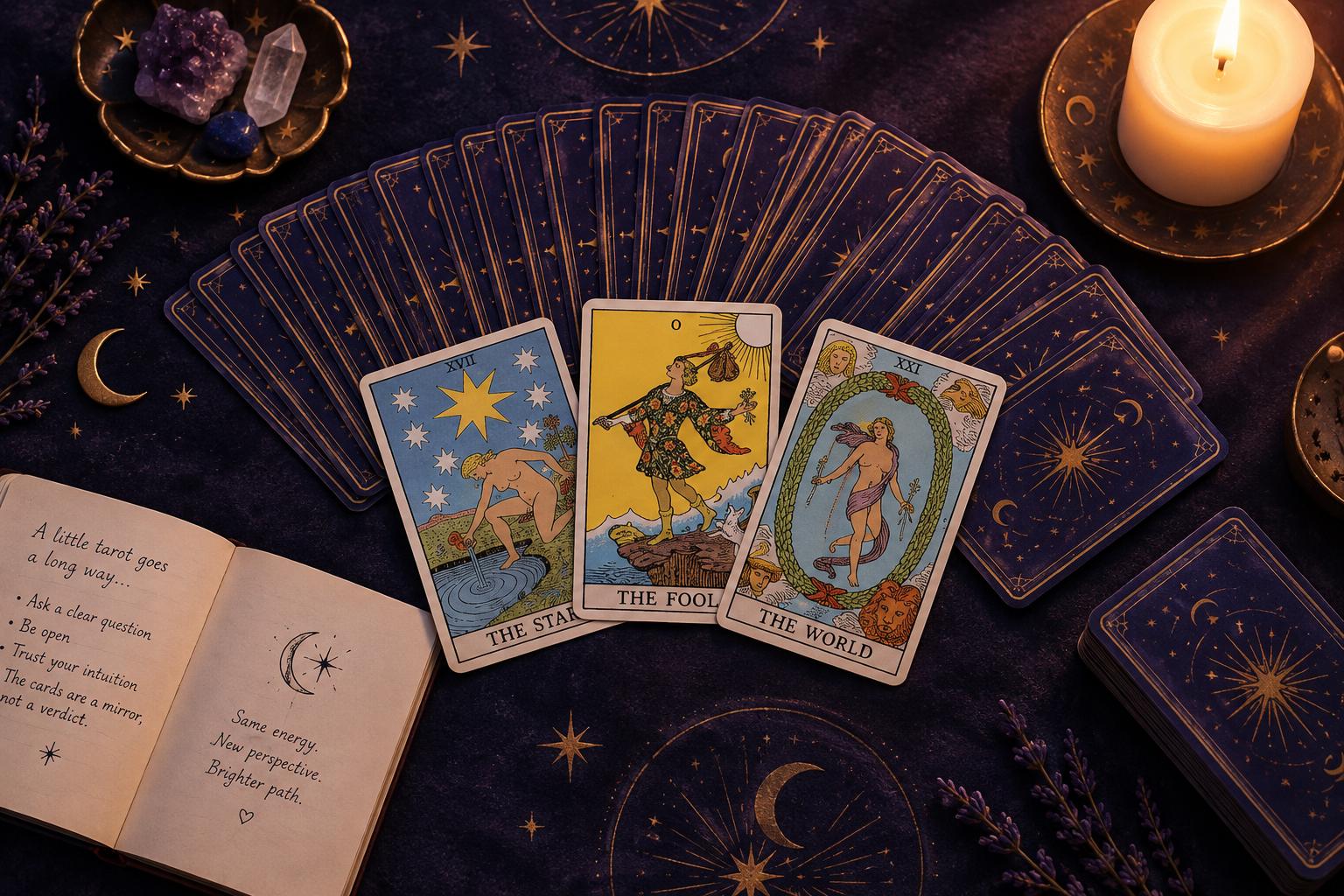
Drawing The Fool in the outcome position of a love reading points to a fresh start that only happens if someone actually jumps. Upright, it is a cautious yes for new beginnings; reversed, it warns that the leap is premature, careless, or being taken for the wrong reasons. Here is how to read it for your exact situation, including what to do next.
Quick Answer: Is The Fool a Yes or No for Love?
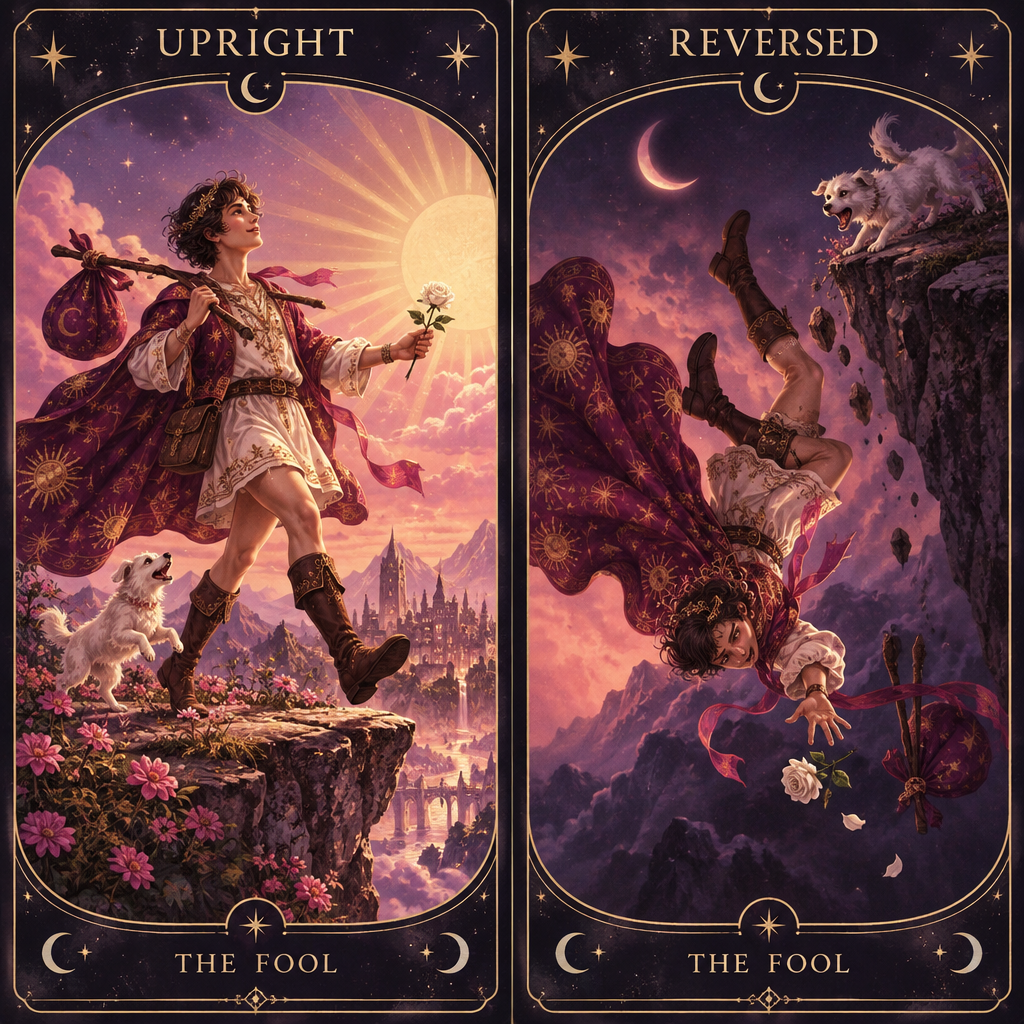
Upright: Yes, but conditional. The relationship or new connection can move forward, and the outcome is open and hopeful. The condition is action. The Fool never guarantees that something will land in your lap; it shows a door that opens when you step through it.
Reversed: Not yet. The energy is there but it is misdirected. Someone is rushing, dodging commitment, or repeating a pattern they have not examined. The honest reading is “pause and look before you leap,” not “no forever.”
If your question was “will this work out,” upright says the path is open and the ending is unwritten. If your question was “should I move forward,” upright says go, reversed says slow down and check the ground first.
Upright and Reversed Keywords
Upright keywords:
| Keyword | What it looks like in love |
|---|---|
| Spontaneity | Unplanned dates, saying yes to a trip, a text sent without overthinking |
| New beginnings | A first meeting, a first date, a relationship reset |
| Innocence | Meeting someone without the armour of past hurts |
| Adventure | A relationship that feels unlike anything before |
| Optimism | Faith that things can go well despite no guarantees |
| Playfulness | Laughter, lightness, low pressure |
| Freedom | Low expectations, no rigid timeline |
Reversed keywords:
| Keyword | What it looks like in love |
|---|---|
| Recklessness | Moving in after three weeks, ignoring red flags |
| Fear of commitment | Keeping things undefined so nobody has to be accountable |
| Naivety | Believing promises that have been broken before |
| Impulsiveness | Big declarations followed by silence |
| Carelessness | Cancelled plans, forgotten details, one-sided effort |
| Repeating patterns | A “new” relationship that feels exactly like the last one |
| False hope | Mistaking an ex’s nostalgia for genuine change |
The Fool’s Symbolism in a Love Reading
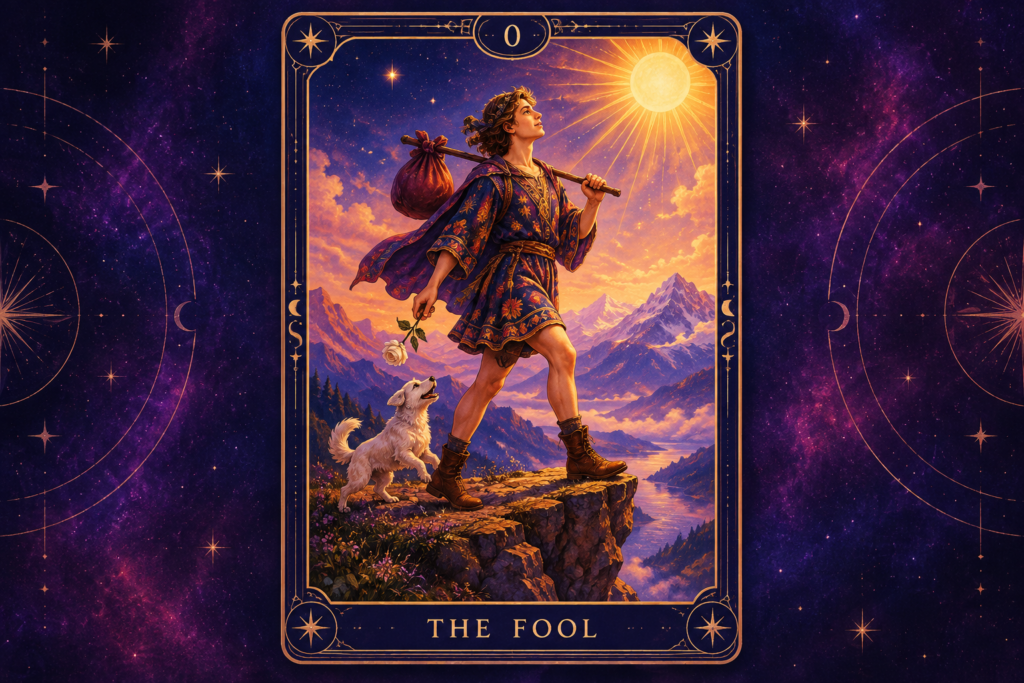
The Fool is card number 0 of the Major Arcana. In the Rider-Waite deck, drawn by Pamela Colman Smith and published in 1909, a young traveller in a patterned tunic steps toward the edge of a cliff with his face turned up to the sky. Every element on the card translates into a love-specific message.
The cliff
The traveller is one step from a drop and does not seem to notice. In love, the cliff is the moment of exposure: telling someone how you feel, agreeing to exclusivity, deleting the dating apps, moving cities for a partner. The card does not say the fall is safe. It says the fall is the point. As an outcome, the cliff asks whether you are willing to risk looking foolish.
The white dog
A small white dog leaps at the Fool’s heels. Readers split on whether it is warning him or cheering him on, and in love both are true. The dog represents instinct and loyalty. If you have a nagging gut feeling about a new person, the dog is that feeling. If you have a friend who has watched your last three relationships implode and is quietly worried about this one, the dog is that friend. Upright, trust the loyalty and keep going. Reversed, the dog is barking and you are ignoring it.
The white rose
The Fool holds a white rose loosely in his left hand. White roses stand for purity and innocence, and in a love reading they signal intentions without hidden motives. Someone drawn to you under this card is not running a long game. The loose grip also matters: the Fool is not clutching the flower. Love under this card is held lightly, which is beautiful at the beginning and a problem if it never deepens.
The wand and bundle
Over his shoulder the Fool carries a staff with a small bundle tied to the end. He travels light. For singles, this is the instruction to stop carrying every past disappointment into the next first date. For couples, it suggests dropping old grievances before trying something new together. For reconciliation, it is the hardest message on the card: you cannot restart with the full baggage of the previous ending.
The mountains
Grey mountains sit behind the Fool in the distance. They represent the challenges that will come later, after the honeymoon phase, after the move-in, after the first real fight. The Fool does not look at them. As an outcome card, the mountains remind you that this reading describes the start, not the whole story. A relationship that begins under The Fool still has to climb.
The sun
A white sun sits in the upper corner, lighting the entire scene. The Fool walks in daylight, which means nothing is hidden. In love, this is honesty and visible intentions. If you are in a situationship where everything happens after midnight and nobody meets anyone’s friends, the sun on this card is pointing at the gap between the energy of the card and the reality of your situation.
Card 0, Uranus, and Air: Why The Fool Feels the Way It Does
The Fool is numbered 0, and its position outside the sequence of the other 21 Major Arcana cards is why it reads as pure potential. Zero is not a lack. It is the point before anything has been decided. In love, a 0 outcome means the relationship has not been written yet, which is good news if you were afraid of a fixed negative answer and frustrating news if you wanted certainty.
The Fool’s Journey, a framework popularised by Eden Gray in her 1970 book A Complete Guide to the Tarot, treats the 22 Major Arcana as one story: the Fool sets out, meets the Magician and the High Priestess, falls in love under The Lovers, is tested by The Tower, and finally arrives at The World. When The Fool appears as a love outcome, you are at the very beginning of that arc. The Lovers, the card that most people hope for in a love reading, is still several steps ahead.
Astrologically, The Fool is linked to Uranus in most modern systems, including the Golden Dawn attributions that influenced the Rider-Waite deck. Uranus governs sudden change, rebellion, and the unexpected. This is the card of the person who meets their partner on a cancelled flight or falls for someone completely outside their usual type. Its element is Air, which rules thought, communication, and freedom. Air relationships start with conversation and need room to breathe. If the connection you are asking about has no space in it, The Fool is pointing at that.
The Fool as Feelings vs. The Fool as Outcome
Readers regularly confuse these two positions, and the difference matters.
When The Fool appears in a “how do they feel about me” position, it describes a state of mind: curiosity, excitement, a slight lack of seriousness. They find you fun. They are not thinking about the future, and that is not an insult. It is where they are.
When The Fool appears as the outcome, it describes where the situation is heading: toward a beginning, a reset, or a leap. The feelings card tells you about them. The outcome card tells you about the direction of travel. Someone can feel Fool energy toward you and still have a King of Pentacles outcome, which means the playfulness is heading somewhere solid. Equally, someone can feel Four of Cups boredom and the outcome can still be The Fool, which usually means something new is going to shake the stagnation.
The Fool as a Love Outcome for Singles
Upright
This is one of the clearest “a new connection is coming” signals in the deck. It rarely arrives in the way you planned. Expect it through a friend’s spontaneous invitation, a trip you almost did not take, or a conversation with someone you had already written off as not your type. The person is usually open, uncomplicated, and genuinely interested in you rather than in a checklist.
What to do: say yes to things you would normally decline. Accept the party invitation, join the hiking group, let the colleague set you up. Leave the “what are we” conversation alone for the first few weeks. The Fool rewards people who are willing to be a beginner again.
Reversed
The new connection is being blocked, and the block is usually internal. Common versions: swiping endlessly but never agreeing to meet, dating people you know are unavailable so you never have to risk anything, or jumping into intensity with strangers so fast that it burns out by week three. The card is also a flag for naivety. If you have recently met someone who seems too good to be true and is already talking about forever, this card is asking you to slow down.
What to do: name what made the last leap unsafe. Was it that you ignored your own instincts (the dog), or that you carried too much from the previous relationship (the bundle)? Then set one small, concrete rule for the next connection, such as three in-person dates before any talk of exclusivity.
The Fool as a Love Outcome for New Relationships
Upright
The relationship is in its honest, light, exciting phase and the outcome supports continuing. There are no hidden agendas on either side. Expect spontaneous plans, inside jokes forming quickly, and a feeling of relief that this does not resemble past relationships.
One caution even in the upright position: The Fool describes the beginning. It does not promise the mountains will be climbed. Enjoy the phase without mistaking it for a completed story.
What to do: keep the playfulness deliberate. Plan one surprise date a month. Take a short trip together early, because travelling with someone shows you how they handle plans going wrong. Have the exclusivity conversation in daylight, literally or figuratively, rather than letting it stay ambiguous.
Reversed
One or both of you is treating the relationship as a game with no stakes. Classic signs include refusing to define anything, cancelling at the last minute, big romantic gestures that are not followed by consistent behaviour, and a partner who is fun but never available when it is inconvenient. This is the “no strings attached” dynamic that one person secretly wants to turn into strings.
It can also mean you are moving too fast. Moving in after a month, meeting the parents on date two, or merging finances before you have had a single disagreement all fall under the reversed Fool.
What to do: slow the timeline and evaluate mutual intent. Ask directly what each of you wants in six months. Watch what happens when you say no to something small. A partner who respects the no is worth continuing with. A partner who sulks or vanishes has just shown you the outcome.
The Fool as a Love Outcome for Existing and Long-Term Relationships
Upright
For couples who have been together for years, The Fool is a reset rather than a beginning. The outcome is renewal: the relationship recovers its sense of adventure, often through a shared new experience. Couples drawing this card are frequently on the edge of a change such as a move, a career shift, a new hobby, or deciding to try for a child, and the card says the change will bring you closer rather than apart.
What to do: do something together that neither of you has done before. Not a restaurant, a genuinely new experience: a dance class, a cycling trip, a cooking course in a cuisine you both know nothing about. Being bad at something together is one of the fastest ways to recover early-relationship energy. Also drop one old argument. Pick the grievance you have been carrying longest and decide, out loud, to leave it behind.
Reversed
The relationship is stuck in routine and one partner is coping with it carelessly. This can look like a partner acting irresponsibly with money, flirting outside the relationship for the thrill of it, or making a big unilateral decision such as quitting a job without discussion. It can also point to emotional immaturity: avoiding hard conversations, laughing off serious concerns, refusing to plan for the future together.
What to do: have the conversation the Fool is avoiding. Be specific about the behaviour rather than the character. “You booked a trip without asking me” lands better than “you are irresponsible.” Then agree on one shared plan for the next year, even a small one. The reversed Fool in a long-term relationship responds well to structure.
The Fool as a Love Outcome for Exes and Reconciliation
This is the context where The Fool is most often misread, because its optimism is easy to mistake for a promise.
Upright
A fresh start is possible, and the key word is fresh. The Fool does not say “resume where you left off.” It says a new relationship with the same person can begin, which is only true if both of you can name what ended the first one and genuinely drop it. If the breakup was about jealousy, trust, or one person’s unreliability, those issues have to have been addressed by actual changes in behaviour during the time apart.
The upright Fool for an ex also suggests that any reunion will be spontaneous and light rather than negotiated. If you find yourselves laughing together again before you have had the serious talk, that is the card in action. Have the serious talk anyway.
What to do: before contacting them, write down the three things that caused the ending. If you cannot honestly say at least two have changed, the fresh start is not available yet. If you can, reach out casually and with no agenda. Suggest something new together rather than returning to your old places.
Reversed
Proceed with caution. The reversed Fool for an ex usually means false hope. They may be reaching out from nostalgia, loneliness, or boredom rather than genuine change. Watch for big promises delivered quickly, an unwillingness to discuss what went wrong, and a desire to skip straight back to the comfortable parts. It can also mean you are the one being naive, remembering the highlights and editing out the reasons it ended.
What to do: watch actions, not words. Give it eight weeks of consistent behaviour before making any decision. If they say they have changed, the proof is in whether they show up on time, follow through on small commitments, and tolerate uncomfortable conversations. Do not move back in, merge accounts, or announce the reunion publicly during this window.
The Fool Reversed in Depth
The reversed Fool as a love outcome covers a wider range than most short guides admit. These are the five readings that come up most often.
Recklessness. Decisions made for the rush rather than the relationship. Eloping, sudden relocations, ultimatums delivered in anger.
Fear of commitment. The most common reversed reading. Someone keeps the relationship at the cliff edge forever, enjoying the view without ever jumping. Undefined status, no future plans, discomfort when the relationship is described to others.
Repeating old patterns. The relationship is technically new but feels familiar in all the wrong ways. The same type, the same dynamic, the same ending approaching. The reversed Fool here is a mirror rather than a prediction.
Mistaking excitement for readiness. Chemistry is not compatibility. The reversed Fool shows up when intensity in the first month is being read as evidence of long-term potential.
False hope. Especially with exes and situationships. Hope is being manufactured from small signals: a like on a post, a late-night text, a vague “we should catch up.”
The old advice to “just make the first move” when the Fool appears reversed misses most of this. Sometimes the block is shyness, and a first move helps. More often the block is a lack of readiness, and the first move just restarts the pattern.
Companion Cards That Change the Love Outcome
The cards around The Fool sharpen the reading considerably.
- The Fool with The Lovers: the new beginning leads into a real partnership. One of the strongest combinations for a love outcome.
- The Fool with the Ace of Cups: a new emotional beginning, often a confession of feelings or a first date that goes better than expected.
- The Fool with the Two of Cups: mutual attraction that is heading toward a defined relationship.
- The Fool with the Knight of Cups: a romantic, charming new person. Check they follow through, because this knight is better at offers than delivery.
- The Fool with the Seven of Swords: caution. Someone is not being fully honest about their intentions.
- The Fool with the Three of Swords: the leap leads to hurt. Often a sign that the excitement is covering unresolved pain from a previous relationship.
- The Fool with The Devil: the “new beginning” is an addictive dynamic or a return to a toxic ex.
- The Fool with the Four of Pentacles: one person wants to leap, the other is holding on tightly. A pacing mismatch.
- The Fool with the Ten of Cups: the beginning leads to lasting happiness. The best long-range outcome combination.
Three Realistic Example Readings
Moving too fast. A querent asks about a relationship that is six weeks old; they are already discussing moving in. Outcome: The Fool reversed with the Knight of Wands. Reading: the pace is being driven by excitement, not knowledge of each other. The advice is to keep separate homes for six months and see whether the enthusiasm survives routine.
Stuck in routine. A couple married eleven years asks whether the spark can return. Outcome: The Fool upright with the Three of Cups. Reading: yes, through shared social adventure. They booked a group cycling holiday with friends neither had done before, which is exactly the shape of this combination.
Long distance. A querent asks whether a long-distance relationship will survive. Outcome: The Fool upright with the Eight of Wands. Reading: a leap is coming, fast, and it involves travel. Someone is going to book a flight or make a move. The outcome is open rather than guaranteed, but the energy favours the person willing to risk the trip.
FAQ
Is The Fool a positive card in love?
Upright, yes. It signals a genuine new beginning with honest intentions and an open future. The positivity is conditional on action and on accepting that the beginning is not the whole story. Reversed, it is a caution rather than a disaster: slow down, check for recklessness or fear of commitment, and make sure you are not repeating a pattern.
Does The Fool mean a new relationship is coming?
For singles, upright, it is one of the strongest indicators that a new connection is on its way, usually arriving unexpectedly and through spontaneous choices. It does not arrive on its own, though. The card asks you to be out in the world saying yes to things.
Can The Fool support reconciliation with an ex?
Upright, it can, but only as a fresh start rather than a resumption. Both people need to have named the reasons for the breakup and shown real behavioural change. Reversed, it points to false hope, nostalgia, or an ex who wants the comfort without the accountability.
What does The Fool reversed mean for an ex?
Proceed with caution. It most often means the ex has not changed in the ways that matter, or that you are remembering the relationship selectively. Judge actions over eight weeks or more, and avoid big recommitments during that period.
Is The Fool a yes or no card?
Upright is a yes with the condition that you take action. Reversed is “not yet.” Neither position is a hard no.
What does The Fool mean for someone’s feelings toward me?
They find you exciting and are curious about you, with little thought about the future. That is a feelings reading rather than an outcome reading, so pair it with the outcome card to see whether the curiosity is heading somewhere.