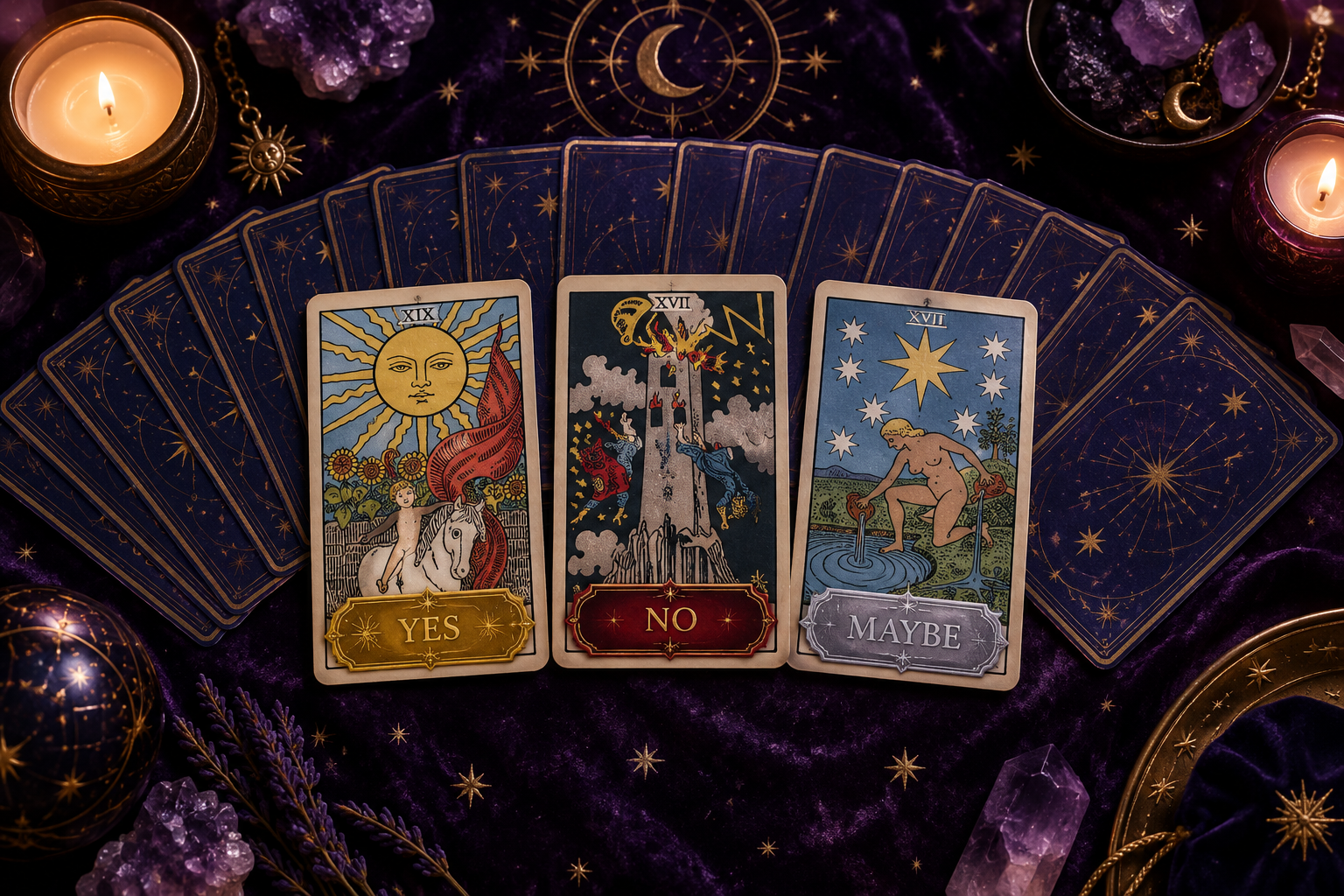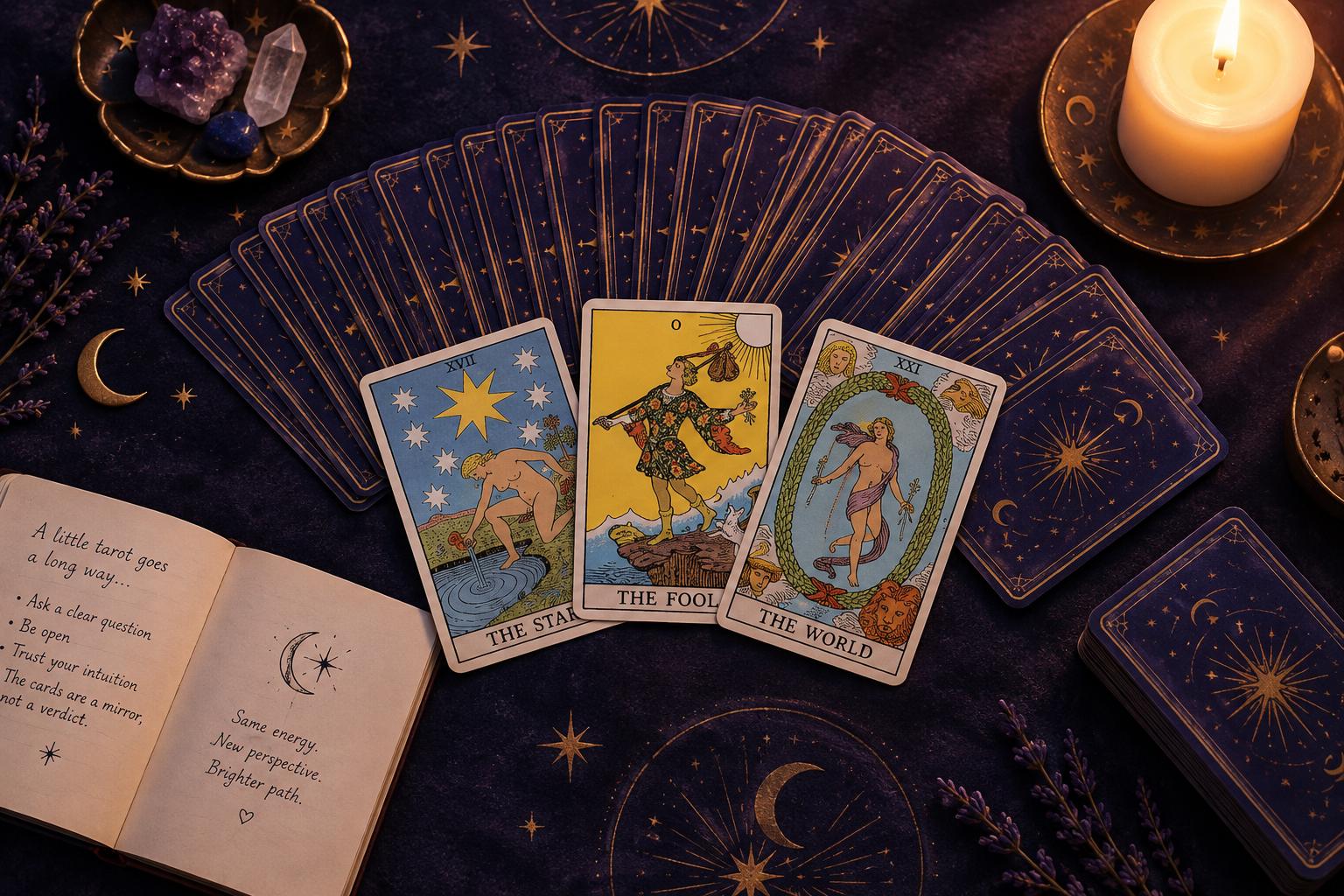
Drawn The Fool and need a straight answer? Upright, The Fool is a yes. Reversed, it is a no or, more precisely, a not yet. Below you’ll find the verdict for love, exes, career, money, health, family and feelings, plus how neighbouring cards can tip the answer either way.
Quick Answer
| Position | Verdict | One-line meaning |
|---|---|---|
| Upright Fool | Yes | Go ahead. The outcome is open, the risk is worth it, and the start matters more than the plan. |
| Reversed Fool | No / Not yet | Something is unready: your timing, your preparation, or your motive. Pause rather than abandon. |
The upright yes comes with a caveat you should not skip: The Fool promises a worthwhile beginning, not a guaranteed ending. If your question is “will this definitely work out,” the honest answer is “yes to starting, no promises on the finish.” That distinction matters for every life area below.
Why The Fool Leans Yes
Card 0 and the Fool’s Journey
The Fool is numbered 0 in the Major Arcana, and that number is the whole point. Zero is not an absence. It is the blank before anything has been written, the point from which every other number grows. In the Rider-Waite-Smith deck (illustrated by Pamela Colman Smith under Arthur Edward Waite, first published in 1909), The Fool sits either at the very start of the sequence or outside it altogether, depending on which tradition you follow. Either way, the card represents pure potential with no history attached.
Tarot readers describe the 21 cards that follow as the Fool’s Journey: the innocent traveller meets the Magician, learns from the High Priestess, is tested by the Tower, and finally arrives at The World. The Fool is the only card that has not yet done any of this. In a yes/no reading, that gives you two things at once. The situation is genuinely open, which is why the answer is yes. But nothing is decided, which is why the yes is conditional on you actually taking the step.
What the imagery tells you
The RWS Fool is a young traveller in a patterned tunic, standing at the edge of a cliff with his face turned upward. Each detail changes how you read a yes/no answer.
- The cliff edge. He is one pace from a drop and does not look at it. This is the risk in your question. The card says the risk is real and still says go.
- The white dog. A small dog leaps at his heels. Readers argue about whether it warns him or urges him on. Both readings are useful: something in your life (instinct, a friend, your gut) is already reacting to this decision. Listen to it, but don’t let it stop you.
- The white rose. Held loosely in his left hand, the rose stands for innocence and purity of intent. The yes is strongest when your motive is clean. If you’re asking for petty or defensive reasons, the card’s support weakens.
- The bindle on a staff. A small bag slung over his shoulder holds everything he owns. He travels light. For yes/no questions this means you already have what you need to begin, even if it feels like very little.
- The white sun and the mountains. A full white sun blazes behind him and grey peaks fill the distance. The sun is favour and clarity. The mountains are the long road ahead. Again: yes to the start, with work still to come.
- The feather in his cap. Red, upright, catching the wind. It echoes the Air element and the card’s lightness. Nothing about The Fool is heavy or stuck.
Air element and Uranus
In the Golden Dawn system that shaped the RWS deck, The Fool is assigned to the element of Air and the planet Uranus. Air is thought, ideas, movement and communication. Uranus is sudden change, rebellion and the unexpected. Together they explain why The Fool’s yes often arrives for questions about leaving, starting, moving or trying something nobody around you expects. It is a poor card for questions about staying put and keeping things exactly as they are. If you ask “should I keep everything the same,” an upright Fool is technically still a yes, but it is a reluctant one, and most experienced readers would treat it as a nudge toward change.
Upright Fool: Yes, and How Strong That Yes Is
Not every upright Fool is the same yes. The question type decides.
Strong yes. Questions about beginning, trying, applying, moving, meeting, saying yes to an invitation, taking a trip, starting a creative project. The Fool is the single best Major Arcana card for “should I start.” Few cards match it here except The Sun, The Star and Ace cards from the Minor Arcana.
Qualified yes. Questions about outcomes. “Will I get the job?” “Will this relationship last?” “Will the investment pay off?” The Fool answers yes to the attempt and declines to promise the result. Treat it as “the door is open, walk through it, and expect to learn a lot on the other side.”
Weak yes bordering on maybe. Questions where the honest need is for structure, patience or caution. “Should I sign a 30-year mortgage?” “Should I confront my boss in front of the team?” The Fool still technically says yes, but his energy is reckless by design. Pair the answer with a second card before acting.
Reversed Fool: No, or Not Yet
The older reading of a reversed Fool as a flat no is too blunt. The reversed card does not kill the idea. It flags that one of three things is off.
- Timing. The opportunity is real but you are early. The classic reversed Fool is someone leaping off the cliff before the dog has even caught up. Wait a cycle, gather information, ask again in a few weeks.
- Preparation. You have the enthusiasm and not the plan. The bindle is empty. Reversed, the card asks what you actually have to work with, and the answer is usually “not enough yet.”
- Motive. Sometimes the reversal points at the opposite failure: you are so afraid of the drop that you refuse a leap you should take. In that case the card’s “no” is really “not like this.” You are approaching from fear rather than openness, and the result will mirror that.
So the practical verdict is no for now. If you can fix the timing, the preparation or the mindset, the answer is likely to become a yes. If you cannot, let it go.
The Fool Yes or No by Life Area
Love
New relationships, upright: yes. This is the card’s home turf. A first date, a new crush, a proposal to start seeing someone exclusively: The Fool says go in with an open heart. Expect excitement, spontaneity and a steep learning curve. Do not expect the card to tell you this person is “the one.” It tells you the beginning is worth having.
Existing relationships, upright: yes, with a push toward freshness. If you are asking whether to stay, the answer is yes, but the card is really saying the relationship needs a new chapter. A trip together, a shared project, a conversation you have been avoiding. Stale routines are the one thing The Fool will not endorse.
Reconciliation with an ex, upright: yes, if it is a genuine fresh start. Here the card’s zero matters most. The Fool says yes to reconnecting only if both people are willing to treat it as a new relationship with no scorekeeping. If your real question is “will we pick up exactly where we left off,” the card’s blankness becomes a warning rather than a promise.
Love, reversed: not yet. New relationship reversed usually points to someone (possibly you) who is not emotionally available, or to a connection built on impulse that cools quickly. Existing relationship reversed suggests one partner feels trapped and the other feels blindsided. Ex reconciliation reversed is the clearest no of the group: the unresolved issues that ended things are still active, and personal healing has to come first.
The Fool as Feelings
When you ask how someone feels about you and draw The Fool upright, the answer is yes, they are interested, and the feeling is light, curious and a little nervous. They see you as a new adventure. They probably have not thought far ahead, and pressuring them for long-term commitment at this stage will spook the dog, so to speak.
Reversed, their feelings are a no or a not yet. Either they are holding back because of past hurt, or they are drawn to you in a careless way that will not hold. The reversed Fool as feelings is a common signal for someone who flirts enthusiastically and disappears.
Career
Upright: yes. Applying for a role you are slightly underqualified for, pitching a new idea, switching industries, going freelance. The Fool loves all of it. The card’s yes is strongest for jobs that involve travel, novelty, creative freedom or startups, and weakest for roles that reward decades of steady institutional loyalty.
Reversed: not yet. Quitting without savings, launching before testing, accepting an offer you have not read. The reversed Fool in a career question almost always means the plan is missing. Sort the plan and ask again.
Finances and Money
Upright: yes for small, recoverable risks. Maybe for large ones. The Fool backs a first investment, a side business, a course that costs a modest amount, a budget overhaul. It does not back putting your emergency fund into a single speculative asset. The traveller carries a small bag for a reason. Risk what you can carry.
Reversed: no. This is one of the few areas where the reversed Fool is close to a hard no rather than a not yet. Reversed in a money question, the card describes impulse spending, gambling on tips, or lending to someone who will not repay. If you asked “should I put money into this,” stop.
Health and Wellness
Upright: yes. Starting a new fitness habit, trying a different approach to an old complaint, booking the appointment you have been postponing, taking a break for your mental health. The Fool favours movement and fresh air, which fits its Air element. It is a good card to draw if you are wondering whether a recovery is possible: the card says the body and mind can begin again.
Reversed: no, slow down. Reversed, the card warns about recklessness with your body. Skipping rest, ignoring symptoms, pushing through injury, or the opposite problem of being so anxious about health that you never act. Tarot is not a medical tool, and a reversed Fool on a health question is a prompt to consult a professional rather than guess.
Family Relationships
Upright: yes. Reaching out to a relative you have drifted from, setting a new boundary, planning a family trip, having the honest conversation. The Fool’s innocence helps here: approach without the old grievances and the response is likely to be better than you fear. The card also often appears when a new family member is on the way or a household is about to change shape.
Reversed: not yet. A reversed Fool in a family question suggests someone is being naive about a long-standing problem, or that an attempt to “start fresh” is skipping the apology that needs to come first. Wait, do the groundwork, then try.
Advice and Action Questions
Some yes/no questions are really “should I do X.” For these, the upright Fool answers: act, and act lightly. Do not over-plan. Do not wait for permission. Make the leap with a small bag and trust that you will figure out the rest in motion.
Reversed, the advice flips to: do not act yet. Write the plan. Ask one person who has done this before. Check what is actually in your bag. Then revisit the question.
Reading The Fool with Other Cards
A single card is a thin basis for a decision. If you pull one or two cards alongside The Fool, they adjust the verdict in predictable ways.
Cards that strengthen the yes
– The Sun: joy and success. Fool plus Sun is about as strong a yes as the deck offers.
– The Star: hope and a sense of being on the right path. Confirms the leap is guided, not random.
– The World: completion. Suggests this beginning closes a long cycle properly. Strong yes.
– Ace of Wands or Ace of Cups: a new spark that matches The Fool’s energy. Yes.
– The Magician: you have the skill to back the risk. Yes, with confidence.
Cards that weaken or reverse the yes
– The Tower: the leap leads to a crash. Treat upright Fool plus Tower as a no, or at least a “not this way.”
– Five of Pentacles: financial or material loss follows. Strong caution on money questions.
– The Devil: the “freedom” you are chasing is actually an impulse or an unhealthy attachment. No.
– The Hanged Man: wait. Turns the Fool’s yes into a not yet.
– Ten of Swords: an ending, not a beginning. No.
Cards that leave it as a maybe
– The Moon: you do not have the full picture. Ask a clearer question.
– Seven of Cups: too many options, not enough reality. Narrow the choice first.
– Two of Swords: a stalemate. The Fool wants to move, the Swords refuse to decide.
Reversed Fool works the same way in reverse. A reversed Fool next to The Sun softens from “no” toward “not yet, but soon.” A reversed Fool next to The Tower hardens into a firm no.
A Simple Spread for The Fool
Pure one-card yes/no pulls work, but a three-card layout gives you the reasoning behind the answer, which is where The Fool is most useful.
Position 1: The question. What am I really asking? (Often the card here reframes the question itself.)
Position 2: The leap. What happens if I act now?
Position 3: The ground. What do I land on?
If The Fool shows up in position 2 upright, the answer is yes and the third card describes your landing. If it appears in position 3 reversed, you will arrive somewhere unprepared, so the answer is not yet. If it appears in position 1, you are asking a question about beginnings whether you realised it or not, and the other two cards tell you how.
Keep the question specific and time-bound. “Should I apply for the Lisbon role this month” gets a far more usable Fool than “will I ever be happy at work.”
Example Yes/No Questions
“Should I say yes to the date on Friday?” Upright Fool. Yes. Go, keep expectations loose, enjoy it. The card is not forecasting a marriage; it is approving a beginning.
“Will my ex come back?” Reversed Fool. Not now. The reversal points at unresolved patterns. The card suggests the door is not fully shut but that walking through it today would repeat the past.
“Should I move my savings into my friend’s new business?” Upright Fool with the Five of Pentacles beside it. A qualified no. The Fool alone would say “sure, start something,” but the Five of Pentacles warns the money would not survive. Invest only an amount you can treat as lost.
“Is now a good time to start running again after my injury?” Upright Fool. Yes, begin, and begin gently. The card favours movement. The gentleness is in the imagery: he is walking, not sprinting.
“Should I bring up the inheritance dispute at the family dinner?” Reversed Fool. Not yet, and not like that. The reversal says you are about to leap into a sensitive subject without preparation. Have the conversation privately, with a plan, and the card will likely flip upright on a re-pull.
“Should I accept the job offer I have not fully read?” Upright Fool with The Hanged Man. Maybe leaning not yet. The Fool approves the opportunity, the Hanged Man insists you pause and read the contract first.
FAQ
Is The Fool a good card to get?
Yes, for almost any question about starting something. It is one of the most optimistic cards in the Major Arcana. It becomes less helpful for questions about security, commitment length or guaranteed outcomes, because its whole nature is openness rather than certainty.
What does The Fool mean in a love reading?
Upright, it points to a new romance or a fresh phase in an existing one, with excitement, spontaneity and some naivety. Reversed, it warns of emotional unavailability, impulsive attachments or a relationship someone wants to escape. As a yes/no card for love it is a yes upright and a not yet reversed.
What does The Fool mean for an ex?
Upright, reconciliation is possible if both people can treat it as a genuine new start rather than a continuation of the old fight. Reversed, the past is still unresolved and reaching out now would repeat the pattern. Wait and work on yourself first.
Is The Fool yes or no for money?
Upright, yes for modest, recoverable risks and a cautious maybe for large ones. Reversed, no. The reversed Fool in a money question describes impulsive spending or speculative bets that lose.
What does The Fool mean as feelings?
Someone sees you as a new adventure: curious, excited, lighthearted, not thinking far ahead. Reversed, they are either holding back from past hurt or interested in a careless way that will not last.
Does a reversed Fool always mean no?
No. The more accurate reading is “no for now” or “not yet.” It flags poor timing, missing preparation or the wrong motive. Fix the problem and the answer often changes. The one area where it reads close to a firm no is money.
Why is The Fool numbered 0?
Zero marks the point before the journey begins. The Fool has not yet met any of the other 21 Major Arcana archetypes, which is why the card represents pure potential. In yes/no terms, zero means the situation is genuinely open and the outcome depends on whether you take the step.