
When the Nine of Wands turns up as someone’s feelings for you, the honest answer is: they care, but they are standing behind a wall they built before they met you. This card describes a person who has been hurt, remembers it clearly, and is still showing up anyway. Below you’ll find what that looks like upright and reversed, across crushes, new relationships, long-term partnerships, exes, and commitment, plus what to actually do about it.
Quick answer: is the Nine of Wands a yes or no for feelings?
| Position | Short answer | What they feel |
|---|---|---|
| Upright | A guarded yes | Loyal, invested, protective, cautious. They have feelings and intend to stay, but they are watching for signs you’ll hurt them. |
| Reversed | A no, or a blocked yes | Exhausted, defensive, close to giving up. Feelings may still exist underneath, but they have no energy left to act on them. |
Upright, this is one of the more quietly committed cards in the Minor Arcana. Reversed, it tells you the person has either stopped fighting for the connection or is so braced for rejection that they can’t let you near.
The imagery, decoded for a feelings reading
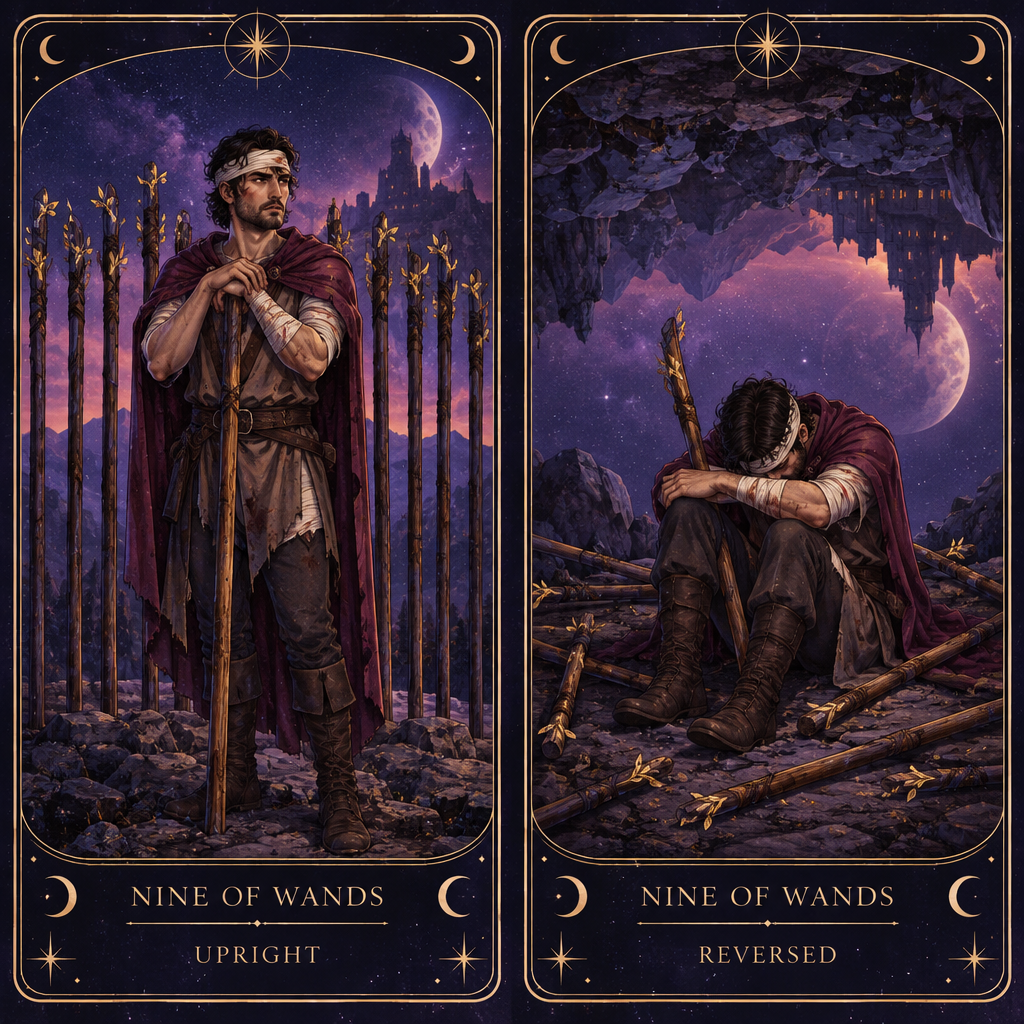
In the Rider-Waite-Smith deck the Nine of Wands shows a man leaning on a single staff, a bandage wrapped around his head. Eight more wands stand upright behind him in a row, like a fence. He isn’t looking at you. His eyes are turned sideways, scanning for whatever might come next. The ground is bare and the sky is pale and empty. There’s no shelter, no companion, nothing soft anywhere in the frame.
Every element of that picture maps onto an emotional state when the card represents how someone feels about you:
- The bandaged head is an old emotional injury that has not fully healed. It might be a betrayal, a divorce, a parent who left, or simply a string of relationships that ended badly. The wound informs how they read you.
- The staff they lean on is their self-reliance. They’ve learned to hold themselves up. Letting you carry any of the weight feels risky.
- The eight wands behind them are the battles they’ve already survived, and also the barrier they keep between themselves and other people. The fence protects, but it also isolates.
- The sideways glance is hypervigilance. They are waiting for the catch. Even when things with you are good, part of them is asking when it will go wrong.
- The bare landscape is emotional exposure. They feel they have nowhere to retreat to, so they stay on guard.
The man is still standing. That is the point. Nine is the number of near completion, and this card sits one step before the Ten of Wands. The person is tired, but they haven’t walked off the field. In a love reading, that translates to feelings that are real and durable, just heavily armoured.
Nine of Wands upright as feelings
Upright, the person feels protective of what you have and is prepared to defend it. Their feelings are not light or flirtatious. They’ve thought about you, decided you matter, and are now in a state of cautious investment.
Here’s what that typically looks like from the inside:
- They care more than they show. The wall is not indifference. It’s the opposite. People don’t build defences around things they don’t value.
- They are testing the ground. Small things carry weight: whether you text when you said you would, whether you keep plans, how you react when they’re vulnerable for a second. They’re collecting evidence that you’re safe.
- They expect to have to fight for the relationship. Sometimes this means loyalty under pressure. Sometimes it means they create friction where there isn’t any, because conflict feels more familiar than ease.
- They are tired. Even upright, this card carries fatigue. The person may feel they’ve been let down one too many times and don’t have much left to spend on another disappointment.
- They won’t quit easily. If you’ve already weathered something difficult together, the Nine of Wands upright says they intend to stay. Their commitment runs deeper than their enthusiasm.
The emotional signature is “battle-worn but still open.” They’ve been through enough to know love costs something, and they’re willing to pay it, slowly, once they trust you won’t take advantage.
What they’re not saying out loud
The person represented by this card rarely announces their fears. Instead you’ll notice behaviour: pulling back after a particularly close moment, asking questions that seem to come out of nowhere, needing reassurance but refusing to request it directly. The unspoken message is usually some version of “I’ve been hurt and I need to know you’re different, but I’m not going to tell you that because it would give you power over me.”
Nine of Wands reversed as feelings
Reversed, the structure collapses. The man has either dropped his staff or is clutching it so tightly nothing else can get through. Both versions show up in feelings readings, and context tells you which one you’re dealing with.
Burnout and giving up
The most common reversed meaning is emotional exhaustion that has tipped into surrender. The person feels they have given everything they can and seen too little in return. They may still have affection for you, but they’ve mentally stepped back. In practice this is the partner who stops arguing, stops asking, stops initiating. Silence from someone who used to fight for you is the clearest real-world signal of the reversed Nine of Wands.
Defensiveness and paranoia
The second version is the wall turned into a bunker. The person is so braced for betrayal that they interpret neutral behaviour as a threat. Feelings here are tangled with suspicion: they may check your phone, read tone into short messages, or accuse you of things you haven’t done. They feel for you, but the fear of being hurt has overtaken the feeling itself. This often shows up when someone has unresolved trauma from a past partner and hasn’t done any work on it.
Insecurity and fear of rejection
Sometimes the reversed card points inward. The person feels they aren’t good enough for you, expects you to leave, and either withdraws first or clings. Their feelings are intense but filtered through self-doubt. You’ll see hot and cold behaviour, over-apologising, or sudden distance after moments of intimacy.
The release interpretation
There’s a gentler reading that applies when surrounding cards are positive (the Star, Six of Cups, Ace of Cups, or the Sun nearby). Here the reversal means the person is finally setting the wands down. They’ve recognised the defences aren’t serving them and are choosing to be vulnerable. Feelings in this case are tender, slightly raw, and new. If the person has recently done therapy, ended a toxic situation, or openly admitted past hurt to you, this is likely the version you’re seeing.
Which interpretation applies? Look at their actions over the last month. Withdrawal plus silence means burnout. Withdrawal plus accusations means defensiveness. Openness plus nervousness means release.
Nine of Wands as feelings for a crush or potential relationship

Upright
Your crush is attracted and guarded in roughly equal measure. They’ve noticed you, they’ve thought about what a relationship might look like, and they’ve already run through the ways it could go wrong. Their feelings are real but they will not make the first move quickly. Expect a slow burn with occasional moments where they seem to lean in, followed by a step back.
What they feel: interest mixed with hesitation, often tied to a relationship that ended within the last year or two. They may also feel they’ve been “the one who tried” too many times and are waiting to see effort from your side first.
What to do: Be consistent and low-pressure. Show up the same way every time. Don’t test them, don’t play games, and don’t push for a definition early. The Nine of Wands responds to proof over promises.
Reversed
The crush may like you but feels unable to risk it. Fear of rejection dominates. They might flirt and then disappear, or send mixed signals that leave you confused. Alternatively, they’ve decided dating isn’t worth the exhaustion right now and have shelved their feelings entirely.
What to do: Lower the stakes. A direct, casual invitation (“I’d like to get coffee, no pressure”) gives them an easy yes without the fear of a dramatic rejection. If they still don’t engage, let it go. You can’t dismantle someone’s walls for them.
Nine of Wands as feelings in a new relationship
Upright
In the first few months, this card says your new partner is invested and nervous. They want this to work, and that wanting scares them. They’re likely comparing you, sometimes unfairly, to the person who hurt them, and checking whether you repeat the same patterns.
Feelings here are protective and somewhat possessive, loyal, and underlined by a sense of “please don’t let this be like last time.” They may be reluctant to say “I love you” first or to introduce you to people close to them, not because they don’t feel it, but because declaring it feels like dropping their guard.
What to do: Create emotional safety deliberately. Tell them what you’re feeling without demanding the same back. Keep your word on small things. When they share a piece of their history, don’t rush to fix it; just listen. Trust accumulates for this person through repetition.
Reversed
The new relationship is already draining them, or they’ve entered it with so much baggage that they can’t be present. You might feel like you’re dating someone who is still half in their last relationship, emotionally if not literally. Defensiveness shows up as irritability over minor issues or sudden coldness after closeness.
What to do: Have one honest conversation about what they’re carrying. Ask directly: “Is there something from before me that’s still affecting you?” If they can name it and want to work on it, the relationship has a chance. If they deny it while the behaviour continues, protect yourself and reconsider.
Nine of Wands as feelings in an existing relationship
Upright
For couples who have been together a while, the upright Nine of Wands usually appears after a difficult period: an affair that was worked through, a serious illness, financial crisis, long distance, or a long run of arguments. Your partner feels committed but depleted. They’ve chosen you repeatedly, and they’re proud of that, but they also feel they’ve been doing a lot of the holding.
Their feelings: loyalty, a sense of shared history, some resentment they may not voice, and a strong desire for the fighting to stop. They aren’t going anywhere, but they need to feel that the effort is mutual.
What to do: Acknowledge what they’ve carried. Specifically. “I know you held things together when I was struggling last year” does more than a general thank-you. Then renegotiate the load. The Nine of Wands often reflects a partner who has been operating in survival mode without anyone noticing.
Reversed
The relationship has worn them down to the point of detachment. The reversed card in a long-term partnership is serious. It describes a partner who has stopped defending the relationship, which usually means they’re considering leaving or have already checked out internally. Alternatively, it points to a partner whose defensiveness has made every conversation a battle, so that both of you are now exhausted.
What to do: This is the moment for a direct, calm conversation about whether you both want to continue and what would need to change. Couples counselling is worth raising. If the answer is “I don’t have anything left,” believe them and respond accordingly rather than trying to argue them back into feeling.
Nine of Wands as feelings from an ex
Upright
Your ex still has feelings, and those feelings are complicated by hurt. The upright card from an ex usually means they think about you, remember the good parts, and also remember exactly how it ended. There may be cautious hope for reconciliation, but they will not be the one to reach out first, because reaching out feels like exposing the wound again.
Their feelings: lingering attachment, pride, fear of being hurt a second time, and a desire to see change before they’d consider trying again. Resentment is possible but it’s not the dominant note upright. Protective self-respect is.
What to do: If you want reconciliation, go in with specifics about what you’d do differently, not with apologies alone. The Nine of Wands ex has heard apologies. They want evidence. Give them space to respond and don’t push for an answer within a day. If you don’t want reconciliation, leave them be. Contact for your own closure will reopen theirs.
Reversed
Reversed, the ex is either done or bitter. The burnout version means they’ve fully disengaged: no anger, no hope, just a closed door. The defensive version means they feel wronged and hold resentment that colours every memory of the relationship. Reconciliation under the reversed Nine of Wands is unlikely without substantial time and usually some outside help.
The exception is the release reading: an ex who has worked through the pain and finally let go of the grudge. This can open the door to friendship or, rarely, a genuinely fresh start. You’ll recognise it because contact with them feels lighter, not charged.
What to do: Reversed from an ex, step back. Pressure will confirm their belief that you don’t respect their limits. If the door reopens later, let it happen on their timeline.
Nine of Wands and commitment, engagement, or marriage
Upright
Someone whose feelings about commitment show up as the upright Nine of Wands wants it and is afraid of it at the same time. They’ve seen marriages fail (their parents’, their own, close friends’), and they treat commitment as a serious risk rather than a happy milestone. Their feelings are sincere: they can picture a future with you. But they will move slowly, ask hard questions, and possibly want things like prenups or long engagements that can feel unromantic.
Read this as loyalty with conditions. Once they commit, they tend to be the type who stays through anything. Getting them to the point of committing is the hard part.
What to do: Don’t issue ultimatums. Instead, talk openly about what commitment means to each of you and what their specific fears are. Naming the fear (“I’m scared of ending up like my parents”) usually shrinks it.
Reversed
Reversed, the person feels commitment-fatigued or outright unwilling. If you’ve been waiting for a proposal, this card suggests they’ve either decided against it or are so anxious about getting it wrong that they’re paralysed. In an existing marriage, it can indicate a partner who has given up on improving things and is coasting, or one who treats every disagreement as a referendum on the marriage.
What to do: Ask the direct question and accept the direct answer. “Do you see us getting married, and if not, what’s stopping you?” You deserve clarity more than you deserve to be protected from an uncomfortable answer.
The Moon in Sagittarius connection
In the Golden Dawn system the Nine of Wands corresponds to the Moon in the second decan of Sagittarius, roughly the middle ten days of the sign, and carries the title “Lord of Great Strength.” That pairing explains a lot about the card’s emotional temperature.
The Moon governs feelings, memory, and instinctive reactions. Sagittarius is fire, optimism, freedom, and the search for meaning. Put them together and you get someone whose emotions are deep and who processes pain by trying to find a lesson in it. This is the person who says “I learned so much from my last relationship” and genuinely means it, while still flinching when you do something that reminds them of it.
Moon in Sagittarius feelings are also restless. The person wants to believe in love again, which is why the upright card leans towards a yes. But they’re wary of anything that feels like confinement. Give them a sense of freedom within the relationship and their guard drops faster. Crowd them and the wands go back up.
Boundaries: the card’s real lesson for relationships
The eight wands behind the figure aren’t only a wall. They’re also a boundary, and the card asks you to notice the difference. A boundary says “this is what I need to feel safe.” A wall says “nobody gets in.”
If the person you’re reading for feels like the Nine of Wands, their boundaries are probably good ones that have hardened into walls through overuse. Your job is not to knock them down. It’s to respect the boundaries so consistently that the walls become unnecessary. That means:
- Asking before assuming, especially around their past.
- Not punishing them for needing time.
- Holding your own boundaries too. The Nine of Wands person respects someone who can say no. It signals you won’t need rescuing, which eases their fear of being drained again.
The card also warns against the opposite failure: having no boundaries at all and expecting the other person to self-regulate. If you keep absorbing their defensiveness without saying anything, you’ll end up as the Ten of Wands, carrying the whole relationship alone.
Nine of Wands as feelings in friendships and family
Outside romance, the card describes the same guardedness in a different costume. A friend represented by the Nine of Wands feels loyal to you but worn out, often because they’ve been the reliable one for too long. Reversed, they may be pulling away quietly rather than confronting whatever bothers them.
Within families, the upright card often appears for a parent or sibling who loves you but communicates through vigilance and worry rather than warmth. They’re protective in a way that can feel controlling. Reversed, it points to someone who has stopped trying to repair a strained family bond, or who holds a grudge they won’t discuss.
The advice carries over: acknowledge what they’ve carried, respect their need for distance, and be the one who stays consistent.
What to do when this card appears for someone’s feelings
Pulling it together, here are the moves that work with the Nine of Wands and the ones that don’t.
Do:
– Be predictable. Reliability is the love language of this card.
– Ask about their history once, listen fully, then don’t bring it up as a weapon later.
– Let them set the pace on vulnerability and commitment.
– Tell them plainly when you’re staying. “I’m not going anywhere” is more valuable to this person than “I love you.”
Don’t:
– Test their feelings by withdrawing to see if they chase. They won’t, and you’ll confirm their fears.
– Take their caution personally. It predates you.
– Try to be their therapist. Encourage real support if they need it.
– Stay indefinitely in a reversed situation hoping exhaustion turns back into effort. Sometimes it does. Often it doesn’t, and you need a time limit for your own sake.
FAQ
Does the Nine of Wands mean he or she still has feelings for me?
Upright, yes. The feelings are present and usually stronger than the person lets on, but they’re wrapped in caution because of previous hurt. Reversed, the feelings may still exist but the person has either run out of energy to pursue them or is too defensive to act. Look at their recent behaviour: continued small efforts mean the feelings are alive; total silence means they’ve stepped back.
Is the Nine of Wands a yes or no for feelings?
Upright is a guarded yes. The person is loyal and invested but needs to see consistency before they relax. Reversed is a no in most contexts, or at best a “not right now.” The exception is when the reversed card sits beside clearly positive cards, which can indicate someone finally letting their defences down.
What does the Nine of Wands reversed mean for reconciliation with an ex?
It’s a poor sign on its own. Reversed from an ex, the card usually means they’ve either disengaged completely or hold enough resentment that they’re not open to trying again. Reconciliation would require time, genuine change on your part, and probably a conversation that addresses the specific hurt rather than a general apology. If you also draw cards like the Star or Six of Cups, the picture softens and an eventual reconnection becomes more plausible.
Why does my person keep pulling away if the card says they have feelings?
Because the Nine of Wands describes someone whose instinct after closeness is to retreat and reassess. Intimacy feels like exposure to them. The pull-back isn’t rejection, it’s recalibration. Give them a day or two without pursuing, then return to normal. Over time, if you’re consistent, the retreats shorten.
How long will it take for someone represented by this card to open up?
Longer than you’d like, and it depends on how deep the original wound goes. Expect months rather than weeks for real trust to form. The Nine of Wands rewards patience but not passivity: keep showing up, keep being honest about your own feelings, and let their walls lower at their own speed.
What does the Nine of Wands mean for my own feelings?
If the card represents you, it’s telling you that you’re approaching this relationship braced for impact. Ask yourself whether the defences are responding to this person’s actual behaviour or to someone from your past. If it’s the past, you may be shutting out someone who hasn’t earned it. If it’s the present, your guard is doing its job and you should trust it.