Last updated: January 2026. Written by a practising tarot reader with more than a decade of client readings.
The Star as a person is the healed survivor: someone who has already lived through their Tower moment and come out the other side gentler, more honest, and quietly hopeful. This guide profiles that person upright and reversed, then covers the Star as feelings, as how someone sees you, in love, and as a yes-or-no answer, so you can apply it to a real person in your life or recognise yourself in it.
What the Card’s Imagery Says About This Person
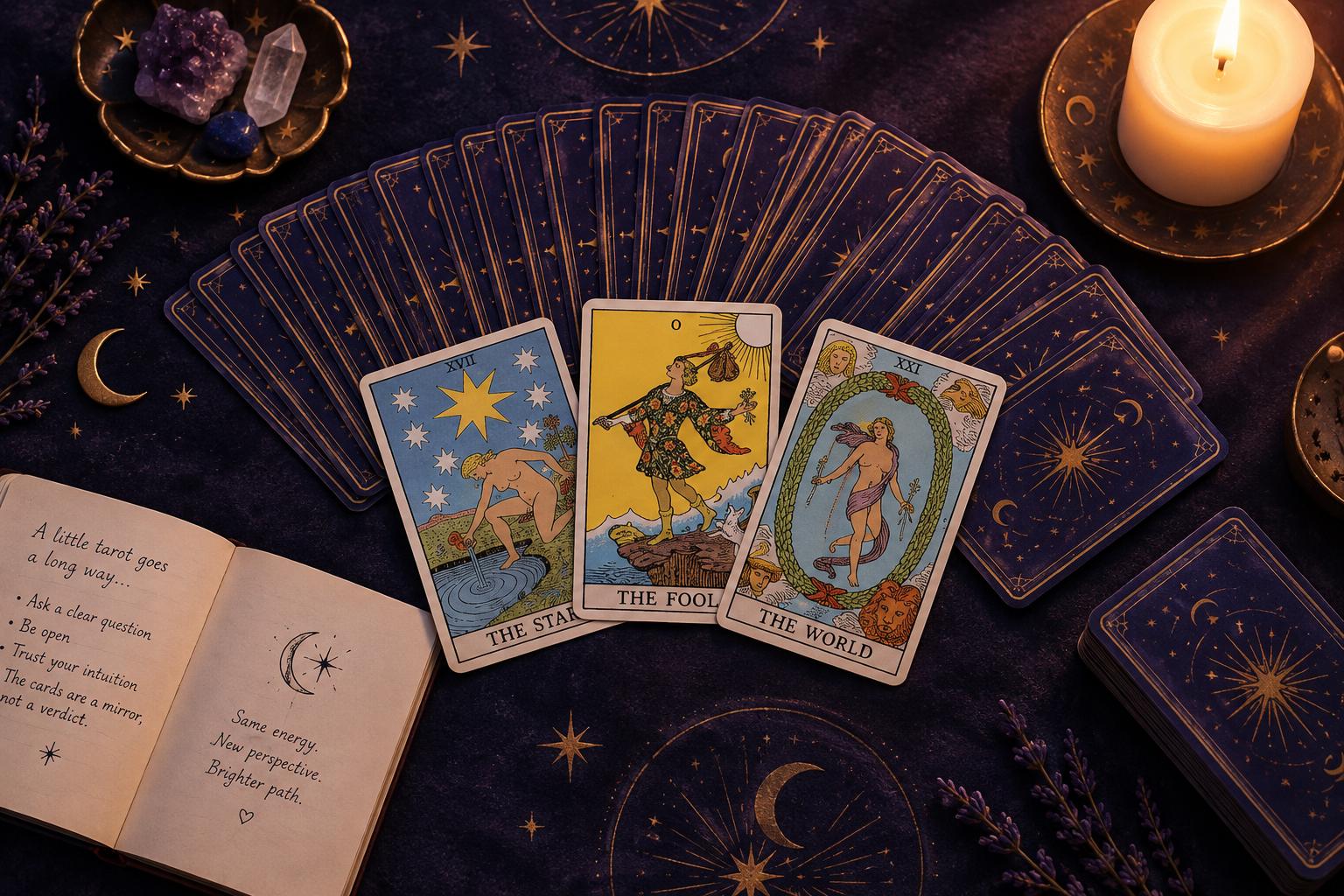
Every reliable personality reading of the Star starts with the picture on the Rider-Waite-Smith card, because each symbol maps directly onto a trait.
| Symbol on the card | What it means for the person |
|---|---|
| The naked woman kneeling at the water | Zero pretence. This person has stopped hiding. Their vulnerability is deliberate, not accidental, and it is their main source of strength. |
| One foot on land, one in the pool | They stay grounded in practical reality while keeping a toe in intuition and emotion. Rarely swept away, rarely rigid. |
| Two jugs, one poured into the water, one onto the earth | They give in two directions at once: nourishing their own inner life and nourishing the people and projects around them. Generosity without depletion. |
| The pool of still water | Emotional balance. Their inner surface is calm enough to reflect what is actually there. |
| Eight stars: seven small, one large | The seven small stars are read as the seven chakras in full alignment; the large one is the guiding star. This is someone with a clear sense of direction who steers others without pushing. |
| The ibis perched in the tree | Sacred to Thoth, god of wisdom and writing. It points to the Star’s intellect and to the card’s Aquarius rulership. This person thinks before they soothe. |
| Open sky, no walls | Transparency and lack of defensiveness. What you see is what is there. |
Hold this image in mind and the personality profile below stops being a list of adjectives and becomes a coherent character.
Where the Star Sits in the Major Arcana
The Star is card XVII. Directly before it is the Tower (XVI), the card of sudden collapse, exposed lies and destroyed structures. Directly after it comes the Moon (XVIII), the card of illusion, fear and the unconscious.
That placement is the key to the whole archetype. The Star person did not arrive at their calm by having an easy life. They arrived there because something fell apart: a marriage, a career, a faith, a version of themselves they had defended for years. The nakedness on the card is what is left after the Tower strips everything away. Their hope is earned, not naive, and that is why it is convincing to other people.
The Moon coming next matters too. The Star’s clarity is a pause, a clearing in the woods, not a permanent destination. Star people know this. They tend to hold their peace lightly rather than clinging to it, which is part of why they don’t moralise at people who are still in their own Tower.
Numerology of XVII
Seventeen reduces to eight (1 + 7 = 8), linking the Star to Strength (VIII in the RWS ordering). Eight is the number of will, endurance and manifestation. Underneath the Star person’s soft exterior sits real stamina. They outlast problems rather than overpower them.
Aquarius, Uranus and the Element of Air
The Star is assigned to Aquarius in the Golden Dawn system that underpins most modern decks, and by extension to Uranus, Aquarius’s modern ruler. The element is Air.
This explains several Star-person traits that otherwise look contradictory:
- Originality. Uranus is the planet of the unexpected. Star people have ideas, tastes and life paths that don’t match their upbringing. They are often the one in the family who moved abroad, changed religion, or chose an unusual career.
- Humanitarian drive. Aquarius is the water-bearer pouring for the collective, which is exactly the figure on the card. Star people care about causes, communities and the future more than most.
- Intellectual curiosity. Air element. They read, question, research, and prefer understanding a problem to being comforted about it.
- A cool streak. Aquarius is a fixed Air sign, and Star people can come across as detached, even aloof, especially early in a relationship. It is not coldness. It is a reluctance to perform emotions they don’t feel yet.
- Friendship as the primary love language. Aquarius rules the eleventh house of friends and groups. Star people frequently fall in love with people who were friends first, and they keep exes as friends more often than any other archetype.
If you know someone born under Aquarius who has survived a serious upheaval, you are very likely looking at a Star person in the flesh.
The Star Upright as a Person
Core personality
The upright Star person is hopeful without being Pollyanna about it, honest without being harsh, and generous without needing credit. Having been through the Tower, they have lost interest in pretending. They tell you what they actually think, but they tell you kindly, because they remember what it felt like to be the one on the ground.
They are calming to be around. Conversations with them slow down. They ask real questions and then actually wait for the answer. They rarely gossip, rarely compete, and almost never try to make themselves look good at someone else’s expense.
Their flaws are real, though. Star people can be frustratingly unhurried when you need a decision now. They can idealise people and projects, then feel quietly let down. Their Aquarian detachment can read as indifference to a partner who wants heat and drama. And because they have made peace with their own past, they sometimes underestimate how raw other people’s wounds still are.
Physical presence and appearance
Readers often describe Star people as having a “glow”, and it is less mystical than it sounds. It comes from rested eyes, relaxed shoulders and a face that isn’t holding tension. They tend to look younger than their age, or at least less worn by it.
Their style follows the card: natural, unfussy, often with something slightly unconventional in it. Think clean lines, soft fabrics, bare skin rather than heavy coverage, minimal or meaningful jewellery (one piece with a story rather than ten for effect). Hair is often worn loose or simply. Many prefer secondhand, ethical or handmade clothing, not as a statement but because it fits their values about consumption. Colours lean toward blues, whites, soft yellows and silvers, echoing the water and starlight on the card.
They move gracefully and sit still easily. In a group photo they are usually the one not posing.
Career and vocation
Star people gravitate to work where they can pour the two jugs: restore themselves and help others at the same time. Common fits, each tied back to the card:
- Healers and therapists: counsellors, nurses, physiotherapists, massage therapists, reiki practitioners. The pool of water is their medium.
- Yoga and meditation teachers, coaches: they teach the balance the card depicts, one foot on earth, one in water.
- Astronomers, astrologers, scientists: the eight stars and the Aquarian love of pattern. Star people are over-represented in research and in the sciences generally.
- Programmers, engineers, data analysts: Uranus rules technology and systems. Many Star people are quietly technical.
- Professors and educators: the ibis of Thoth. They transmit knowledge rather than hoard it.
- Artists, musicians, writers: especially those whose work came out of a personal crisis. Their art tends to be honest rather than clever.
- Charity, NGO, environmental and public-health work: the water-bearer pouring for the collective.
- Hospice and recovery work: people who have survived their own Tower are uniquely able to sit with others in theirs.
What they avoid: sales roles built on pressure, corporate politics, anything requiring a fake persona. They burn out fast in environments that punish honesty.
How to Recognise a Star Person in Real Life
Use this as a checklist. Five or more and you are almost certainly dealing with the Star.
- They have a visible “before and after” in their life story, and they speak about the “before” without bitterness.
- Their presence lowers your heart rate. You leave conversations feeling lighter, not drained.
- They say “I don’t know” easily and without embarrassment.
- They give advice only when asked, and the advice is practical rather than preachy.
- They are drawn to water: swimming, baths, living near the sea, long showers to think.
- They keep plants alive, or at least keep trying.
- They donate, volunteer or mentor quietly, and you usually find out by accident.
- They have at least one unusual interest they pursue with real depth (astronomy, obscure music, a dead language, a niche science).
- They look at the sky. Literally. They notice sunsets, stars and weather.
- They have forgiven someone most people would still hate.
- They don’t rush you, and they don’t let you rush them.
- Their social media, if they use it, is sparse and sincere. No performance.
The Star Tarot Card as a Person in Love
Soulmate and healing energy
When the Star represents a partner or potential partner, it is one of the most encouraging cards in the deck. This is a person who will not play games, who will see you naked (in every sense) and not flinch, and who brings a settling influence to someone whose relationships have been chaotic.
Because the Star follows the Tower, this card as a love interest very often means: the person who shows up after your worst breakup, divorce or betrayal. They are the proof that the collapse was not the end of the story. Many readers call this soulmate energy, and with a caveat it fits. The caveat is that the Star is a healing connection first. Whether it becomes a forever connection depends on the surrounding cards and on whether you are ready to receive calm rather than chaos.
The “star-crossed lovers” question
A lot of querents reach for the romantic phrase and worry the card means doomed love. It doesn’t. The Star is about alignment and guidance, not fate working against you. The star-crossed reading only applies if the Star appears alongside cards of separation (the Three of Swords, the Tower itself, the Eight of Cups) or is reversed. On its own, the Star describes a relationship that is good for both people, even if the timing is slow.
Platonic or romantic?
Here the Aquarius connection becomes practical. Star people often start as friends and stay in a warm, undefined space for a long time. If you are asking whether a Star person’s interest is romantic, look at the surrounding cards: Cups cards (especially the Two or the Ace) tilt it romantic; Swords and Pentacles cards suggest a deep but platonic bond. Left ambiguous, assume the Star person feels real affection and is not in a hurry to label it.
Reconciliation
Asked about getting back together, the upright Star is a cautious yes with conditions. It signals that healing is possible and that the Star person is open to it, but only if the Tower has genuinely finished falling. If the old patterns are still standing, the Star will not come back to rebuild them. Expect them to want honest conversation, slow re-trust and no drama. Pressure will push them away faster than anything.
Dating a Star person: what to expect
Steady communication without constant texting. Independence that is not a rejection. A partner who wants to know your actual opinions. Someone who will need alone time, often outdoors or near water, and who will come back more present for it. Someone who will tell you the truth about themselves early, sometimes before you are ready to hear it. If you need intensity and jealousy to feel loved, this person will frustrate you. If you want to be seen clearly and treated gently, few cards promise it more directly.
Star Tarot as Feelings
Upright: what they feel about you
When the Star appears in the feelings position, the person feels hopeful about you, and often healed by you. They see you as a guiding light: someone who has restored their faith that relationships or people can be good. They feel calm in your presence and spiritually drawn to you in a way they may struggle to articulate.
There is a frequent secondary note, and it catches querents off guard: they may feel you are out of their league. The Star is high in the sky. Someone who feels Star-energy toward you may admire you from a distance and hesitate to make a move, assuming you would never pick them. If they seem warm but slow, this is usually why.
Reversed: what they feel about you
The Star reversed as feelings describes someone discouraged and guarded. They may have felt hopeful about you once and had that hope dented, by you or by their own history. They are emotionally withdrawn, not out of indifference but out of self-protection.
Watch for oscillation. The reversed Star swings between “nothing good ever lasts” and brittle, forced positivity (“it’s fine, everything’s fine”). Neither state is the truth. Underneath both is someone who wants to believe in you and is afraid to.
Star Tarot as How Someone Sees You
Pulled in the “how they see me” position, the Star is flattering, though it comes with a complication.
They see you as admirable, perhaps idealised. You are the calming presence in their life, the person who seems to have it together, who is beautiful in an unforced way, who makes them feel they could be better. Many of them see you as a kind of inspiration or guide.
The complication is distance. Stars are looked at, not held. The person may place you on a pedestal, assume you are out of reach, and never test whether you are actually interested. If you want this person to approach you, you will likely need to come down off the pedestal first: show a flaw, make a joke at your own expense, or simply ask them out. Admiration from afar rarely converts to a relationship without someone closing the gap.
Reversed in this position, they see you as disappointing or as having lost your sparkle. Sometimes it means they see you as “too good to be true” and are actively looking for the catch.
The Star as a Person Reversed
The reversed Star is one of the most misread cards in tarot. It is not a villain card. It describes a Star person whose light has gone out, temporarily, and the picture is one of loss, not malice.
What is happening inside
The card turned upside down spills the two jugs and empties the pool. Internally this is a crisis of faith. The person once believed in something (a path, a partner, a higher power, their own worth) and that belief has drained away, often after a Tower event that they have not yet metabolised.
Common features:
- Loss of inner light. They describe feeling flat, grey, unable to picture a future. This is frequently clinical depression or burnout, and a reader who spots the reversed Star repeatedly should gently suggest professional support rather than more readings.
- Crisis of faith. Religious, spiritual or simply existential. “What’s the point” is their refrain.
- Co-dependency. The water-bearer who can no longer fill her own jug starts drinking from other people’s. The reversed Star leans heavily on a partner, friend or community for the sense of hope they can’t generate themselves. This can look like clinginess or constant reassurance-seeking.
- Social anxiety. The naked figure becomes ashamed of being seen. They cancel plans, avoid groups, go quiet online.
- Toxic positivity. The other face of the same wound. Some reversed Stars overcorrect with relentless affirmations and “good vibes only”, refusing to acknowledge anything dark. It is hope performed rather than felt, and it is exhausting for the people around them.
- Loss of self. They mirror whoever they are with, adopt others’ opinions, and lose track of what they themselves want. The Aquarian originality dims.
How they affect others
Being close to a reversed Star is draining in a specific way. You find yourself carrying their hope for them. They may undermine your plans with pessimism (“that’ll never work”), or they may wear you out with cheerfulness that will not allow a real conversation. In relationships they can become anxious, over-attached and quick to assume abandonment, because the last time they trusted, the Tower fell.
Reversed physical expression
The glow goes. Reversed Star people often look tired, with dull skin and heavy eyes. They cover up more, dress in muted or dark colours, and stop bothering with the small personal touches that used to define them. Posture closes. Alternatively, in the toxic-positivity version, the presentation becomes almost too polished, a bright surface maintained with effort.
Temporary, not permanent
This is the most important point about the reversed Star and the one thin guides miss. The star is still in the sky; the person has just lost sight of it. Of all the reversed Majors, this is among the most reliably recoverable. Water refills. The person who has been hopeless for six months is very often the one radiating upright Star energy a year later.
What they need from you
Patience, not pressure. Do not try to argue them into hope; it entrenches the pessimism or triggers more fake cheer. Instead:
- Stay consistent. Show up when you said you would. Reliability rebuilds faith faster than pep talks.
- Get them near water, nature, or sky. It sounds trite, and it works for this archetype specifically.
- Encourage small acts of giving. The water-bearer heals by pouring. Volunteering, helping a neighbour, even watering plants begins to refill the jug.
- Name the darkness without drowning in it. “This is a hard season” is more useful to them than “look on the bright side”.
- Suggest therapy if the flatness lasts. The reversed Star and depression overlap heavily.
Man vs Woman: How the Archetype Shows Up
The card depicts a woman, but the energy is not gendered. The expression often differs by how men and women are socialised.
A Star woman tends to read as serene, nurturing and unshowy. People confide in her within minutes of meeting her. She is often mistaken for passive when she is actually just unhurried, and her independence surprises partners who expected softness to mean compliance.
A Star man often reads as unusually open for a man, emotionally literate, uninterested in posturing. He may be the friend other men call when they are falling apart. He frequently has a creative or scientific pursuit he is quietly serious about, and he is drawn to partners who are intellectually alive. His Aquarian detachment can be misread as lack of interest; in truth he is slower to declare than he is to feel.
Reversed, Star women tend toward co-dependency and self-erasure; Star men tend toward withdrawal and cynicism. Both routes lead back to the same lost light.
The Star as a Yes or No
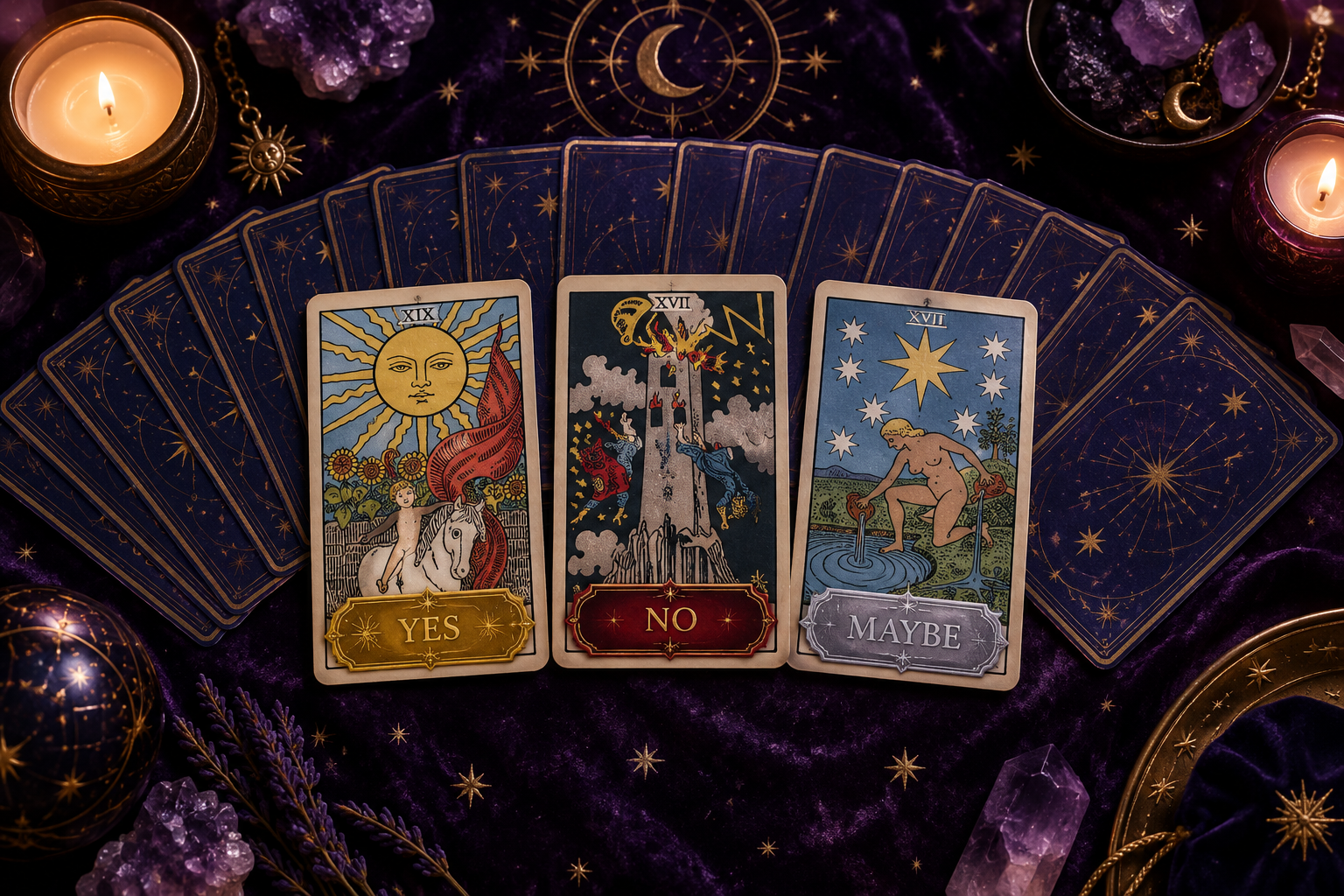
Upright, the Star is a clear yes, with the note that the outcome arrives through patience rather than force. It is one of the three or four most positive yes-cards in the deck.
Reversed, it is not yet: the thing is possible but hope or faith needs to be rebuilt first. Treat it as a soft no for anything requiring immediate action, and a “wait and work on yourself” for anything long-term.
FAQ
What does the Star tarot card mean as a person?
As a person, the Star represents someone who has survived a major upheaval and emerged authentic, hopeful and emotionally balanced. They are calming to be around, honest without harshness, generous with their time and knowledge, and drawn to healing, teaching, science or creative work. Astrologically they carry Aquarius and Uranus traits: originality, humanitarian values and a touch of detachment.
What does the Star tarot reversed mean as a person?
Reversed, the Star describes someone who has temporarily lost their inner light. They are going through a crisis of faith, may be depressed or burnt out, and often swing between hopelessness and forced positivity. Co-dependency, social withdrawal and loss of personal identity are common. The state is recoverable, and they need patience and consistency rather than pressure.
What does the Star mean as feelings?
Upright, the person feels hopeful about you, healed by you, and sees you as a guiding light. They may also feel you are out of their league and admire you from a distance. Reversed, they feel discouraged and guarded, and are protecting themselves from being disappointed again.
What does the Star mean as how someone sees you?
They see you as admirable, calming and inspiring, often idealised. The risk is that they also see you as unreachable and never make a move. If you want them closer, show them you are human.
How do you recognise a Star person?
Look for someone with a visible “before and after” story told without bitterness, a calming presence, a love of water and sky, quiet generosity, an unusual deep interest, and the habit of saying “I don’t know” without embarrassment.
Is the Star a soulmate card?
It is a healing-connection card, and in practice it frequently marks the partner who arrives after a painful Tower period. Whether it is a lifelong soulmate depends on the surrounding cards, but on its own the Star describes a relationship that is good for both people.
Is the Star a yes or no card?
Upright, yes. Reversed, not yet.